Shanghai Weekly Bulletin (Issue 122 No.2 December 2025) ( 2025.12.09 )
Laws and Regulations
National
1.State Council Approves the Yangtze River Delta Territorial Spatial Plan (2023—2035)
[Keywords: Yangtze River Delta, Territorial spatial plan]
On November 30, the State Council approved the Yangtze River Delta Territorial Spatial Plan (2023—2035). The document calls for optimizing a spatial layout driven by metropolitan clusters and supports Shanghai in playing a leading role. It also promotes closer spatial integration between the Shanghai metropolitan cluster and the Suzhou-Wuxi-Changzhou metropolitan cluster, as well as coordinated spatial planning with the metropolitan clusters of Nanjing, Hangzhou, Hefei and Ningbo, in order to underpin the development of a world class city cluster.
Source: Website of the Chinese Government
2.SPC Releases Typical Civil and Commercial Cases on the Equal Protection of Legitimate Rights and Interests of Private Enterprises
[Keywords: Private enterprises]
On December 4, the Supreme People’s Court (SPC) released a collection of typical civil and commercial cases illustrating how people’s courts lawfully and equally protect the legitimate rights and interests of private enterprises. The seven cases released this time cover regions across the eastern, central and western parts of the country. They address several key issues including the improvement of the financing environment, the activation of limited liability for shareholders, the resolution of historical legacy matters, and the protection of corporate reputation and credit.
Source: SPC
3.Public Opinions Solicited on Draft Regulations for Supervision and Administration of Listed Companies
[Keywords: Listed companies]
On December 5, the China Securities Regulatory Commission (CSRC) publicly solicited opinions on the Regulations on the Supervision and Administration of Listed Companies (Draft for Public Comments). The main contents of the document include clarifying the overall requirements for the supervision of listed companies, further strengthening the supervision over information disclosure, regulating mergers and acquisitions and restructuring activities, enhancing investor protection, and stipulating supervision and management and legal responsibilities.
Source: CSRC
https://www.csrc.gov.cn/csrc/c101981/c7599967/content.shtml
Shanghai
1.Shanghai Accelerates Development as a Modern Maritime City
[Keywords: Marine industry]
The General Office of the Shanghai Municipal People’s Government recently released the Shanghai Marine Industry Development Plan (2026-2035). The document comprises four parts, namely, main objectives, industrial system, spatial layout, and key tasks.
Source: International Services Shanghai
https://english.shanghai.gov.cn/en-Latest-WhatsNew/20251203/935f6f6c4bc947e98dd9d050ca5919e2.html
2.Functional Upgrades Introduced for Free Trade Accounts in the China (Shanghai) Pilot Free Trade Zone
[Keywords: FTZ, Free trade accounts]
The Shanghai Head Office of the People’s Bank of China (PBC) recently issued the Implementation Measures for the Functional Upgrade of Free Trade Accounts in the China (Shanghai) Pilot Free Trade Zone (for Trial Implementation). The document introduces pilot upgrades to the functions of free trade accounts and sets out the eligibility requirements for participating enterprises. The document took effect on December 5, 2025.
Source: Shanghai Head Office of the PBC
https://shanghai.pbc.gov.cn/fzhshanghai/113577/114829/114895/5916502/index.html
3.Shanghai Solicits Public Opinions on Draft Regulations for Development of Cruise Economy
[Keywords: Cruise economy]
On December 1, the General Office of the Standing Committee of the Shanghai Municipal People’s Congress issued a notice to solicit public opinions on the Regulations of Shanghai Municipality on Promoting the Development of the Cruise Economy (Draft). The document mainly focuses on defining the development principles and management system of the cruise economy, strengthening policy innovation and market cultivation for cruise tourism, and building a first-class cruise hub port and port service environments.
Source: Shanghai Municipal People’s Congress
4.Shanghai Solicits Public Opinions on Draft Regulations for Free Trade Offshore Bond Business in Pudong New Area
[Key words: Free trade offshore bonds]
On 1 December, the General Office of the Standing Committee of the Shanghai Municipal People’s Congress issued a public notice to solicit comments on the Several Regulations of Shanghai Pudong New Area on the Development of Free Trade Offshore Bond Business (Draft). The document defines the scope of bond issuers and investors and specifies the eligibility criteria for issuers, with the aim to ensure that the issuance and investment of free trade offshore bonds are carried out in accordance with laws and regulations.
Source: Shanghai Municipal People’s Congress
Q&A
The official in charge of relevant departments of the SPC answered reporters’ questions regarding typical civil and commercial cases concerning the equal protection of the legitimate rights and interests of private enterprises
Q1
The typical cases released by the SPC concerning the protection of the legitimate rights and interests of private enterprises and entrepreneurs have generated a strong response in society and greatly boosted entrepreneurs’ confidence. In addition to releasing these typical cases, what other specific measures has SPC taken to protect private enterprises equally in accordance with the law?
A1
First, the SPC has issued dedicated guiding opinions. In recent years, the SPC has successively released a series of targeted and practical judicial documents. These include the Opinion on Fully Performing Judicial Functions to Earnestly Strengthen Judicial Protection of Property Rights and the Guiding Opinions on Optimizing the Law-based Environment to Promote the Development and Growth of the Private Economy.
This year, to thoroughly implement the guiding principles of General Secretary Xi Jinping’s important speech at the symposium on private enterprises and to advance the effective implementation of the Law on Promoting the Private Economy, the SPC issued the Guiding Opinions on Implementing the Law of the People’s Republic of China on Promoting the Private Economy on 30 July. This document represents another vivid practice of the people’s courts in thoroughly implementing Xi Jinping’s Thought?on Economy?and Xi Jinping’s Thought on the Rule of Law at a new historical starting point. It also reflects the firm commitment to putting into effect the Party’s and the state’s policies on the development of the private economy, and to providing judicial support for the high-quality development of the private economy through high-quality judicial adjudication. Closely aligning with the essence of the law and the needs of judicial practice, the document sets forth the overall requirements and anchor core directions, i.e., ensuring equal treatment in accordance with the law, guiding and regulating business operations, strengthening impartial judicial adjudication, and improving judicial systems and mechanisms. It introduces 25 detailed and pragmatic measures. These measures fully reflect the SPC’s commitment to “approaching matters from a political perspective and handling them based on the rule of law”. With strong political awareness in implementing the Party’s and the state’s policies through the development of the judicial system, they continuously provide a solid law-based foundation for the deep integration of the private economy into China’s path to modernization.
Second, the SPC has provided convenient and diversified service for resolving substantive disputes. People’s courts uphold and develop the “Fengqiao Experience” in the new era. They continuously improve litigation services to facilitate the participation of enterprises in legal proceedings. The courts actively support and promote the standardized development of comprehensive governance centers and fulfill their statutory duty to guide people’s mediation. They strive to improve the quality and efficiency of dispute resolution through industry and lawyer mediation, and provide private enterprises with low cost, diversified and streamlined dispute resolution options.
Leveraging the unique advantage of “resolving business disputes through chambers of commerce”, the courts are deepening the development of a “headquarters-to-headquarters” diversified dispute resolution mechanism in collaboration with the All-China Federation of Industry and Commerce. This helps shape a new model of dispute resolution that integrates the functions of courts and chambers of commerce.
Furthermore, the courts steadfastly adhere to the case filing registration system. For lawsuits that meet statutory requirements, they ensure that “every case is filed, and every complaint is heard”. Using the “case-to-item ratio” as a key metric, the SPC encourages people’s courts at all levels to carry out their work in a thorough and detailed manner at every stage of the trial process. The goal is to settle disputes, define liabilities, and achieve substantive resolution. In the first half of 2025, the number of second-instance cases handled by courts nationwide fell by 10.86%, and the number of retrial cases dropped by 14.46%. An increasing number of disputes were substantively resolved during the first-instance procedure, which has effectively reduced litigation costs for enterprises.
In addition, the SPC has worked in conjunction with the National Development and Reform Commission, the People’s Bank of China, the National Financial Regulatory Administration, the State-owned Assets Supervision and Administration Commission of the State Council, and other authorities to issue relevant policies. These joint efforts aim to foster a law-based and market-oriented business environment, lower operational and financing costs for private enterprises, and prevent and reduce enterprise-related disputes at their source.
Third, the SPC has put up efforts to enhance the quality and efficiency of judicial adjudication. For enterprise-related cases in which facts are clear, claims can be separated, and timely relief is necessary, courts make effective use of preliminary judgments in accordance with the law. This practice ensures the timely protection of the legitimate rights and interests of enterprises and prevents them from suffering greater losses due to prolonged trial cycles. Stronger efforts are devoted to clearing backlogs of enterprise-related cases. During its quarterly judicial data consultations, the SPC conducts specialized research on data regarding enterprise-related judicial cases to prevent unresolved cases from dragging on and affecting the production and operation of enterprises.
Additionally, the development of the People’s Court Case Database and Fa Da Wang?(or Legal Q&A Network) is advanced further. Of the more than 5,000 cases in the People’s Court Case Database, over 2,000 involve companies and enterprises. This highlights the significant attention and importance that judicial practice attaches to disputes involving corporate entities, including private enterprises. In July this year, the SPC also released a curated set of questions and answers from the Fa Da Wang?on the theme of protecting private enterprises. These efforts further unify the standards for the application of law in enterprise-related cases and ensure the implementation of lawful and equal protection in every individual case. They also guide enterprises to operate in compliance with laws and regulations and with integrity, stabilize market expectations and stimulate market vitality.
Moving forward, the SPC will accelerate the issuance of judicial interpretations of the Company Law and relevant judicial recommendations. It will continue to enrich and make full use of the People’s Court Case Database and Fa Da Wang. By leveraging the “One Network” system of the people’s courts, the SPC aims to further improve the quality and efficiency of adjudication and support the sustained, healthy, and high-quality development of private enterprises.
Source: SPC
Expert Perspective
Major Revision of Shanghai FTZ Regulations: The Upgrade Path of China’s High-standard Opening-up
By Jiang Fengwen (Chance Bridge Law Firm)
[Continued from the Previous Issue]
III. Main Contents and Innovative Highlights of the Revision to the Regulations of the Shanghai Pilot FTZ
1. An Upgraded Framework for Investment and Trade Facilitation
In terms of investment and trade facilitation, the latest revision of the Regulations not only consolidates proven practices accumulated over the past decade but also introduces a series of innovative measures.
The revised Regulations continue to emphasize the management model of “Pre-entry National Treatment plus Negative List” for foreign investment. Building on this foundation, it also explores more robust stress tests. Article 10 of the Regulations provides that “sectors outside the negative list shall be subject to unified administration for domestic and foreign investment, and no implicit barriers may be imposed.” At the same time, “for sectors included in the negative list, the pilot FTZ may, in line with national provisions, implement experimental policy measures for foreign investment that meet the practical needs of the development of the zone and pilot higher-standard opening-up.” This provides a legal basis for conducting more extensive opening-up tests in sensitive sectors.
In the area of trade facilitation, the Regulations consolidate the proven institutional practices of the “International Trade Single Window” and “Streamlined Customs Clearance”. Meanwhile, institutional arrangements are made for innovative measures. These include new business forms of trade in goods, full-process digitalization of cross-border trade, pilot programs for exemption from compulsory product certification procedures, and the supply of medicines and medical devices for international vessels. These measures have significantly enhanced trade efficiency. Taking shipping facilitation as an example, the optimization of the operation model for international transshipment and consolidation allows goods shipped from overseas and transhipped through the Yangshan Port en route to a third country to be exempt from inspection. This practice has reduced overall operating time by 50% and increased the share of international transshipment and consolidation cargo at Yangshan port from 12.6% to 18.6%. As a result, the port has risen to first place in global container port performance rankings.
It is worth noting that the Regulations also include specific provisions on new business models such as “bonded repair”. This will support the Shanghai Pilot FTZ to extend and upgrade comprehensively from traditional trade in goods to the entire trade industrial chain.
2. A Balance between Financial Opening-up and Risk Prevention and Control
Financial opening-up is another major highlight of this revision of the Regulations. The Regulations dedicate a specific chapter to “Financial Opening-up and Innovation”. It proposes advancing the development of financial infrastructure and promoting the further opening-up of financial factor markets. It also calls for improving cross-border financial services and offshore financial businesses centered on the free trade account system. In line with the distinctive features of the Shanghai Pilot FTZ, the Regulations explicitly set out support measures to develop sci-tech finance, green finance, and digital finance.
In terms of concrete measures, the Regulations state that, “in accordance with the arrangements of national regulatory authorities, prudent steps will be taken to allow eligible futures institutions to explore overseas futures brokerage services, and to provide services for commodities production and trading enterprises with genuine needs for cross-border hedging.” Furthermore, the Regulations “encourage and support eligible multinational companies to pilot integrated RMB and foreign currency cash pooling business”. These measures will significantly strengthen the ability of Shanghai as an international financial center to allocate global financial resources.
Financial opening-up and risk prevention and control are like two sides of the same coin. While advancing financial opening-up, the Regulations place particular emphasis on “strengthening financial risk prevention and control mechanisms to ensure the stable operation of the financial system”. The Regulations call for building a risk prevention and control framework commensurate with high-standard opening-up, and improving cross-market, cross-sector, and cross-regional financial risk monitoring and early warning mechanisms. The aim is to firmly safeguard the bottom line of preventing systemic financial risks. This legislative approach of “ensuring effective control while opening up” demonstrates China’s mature and steady stance in the field of financial opening-up.
[To be Continued]
One Week in Shanghai
Latest News
1.Shanghai Eastern Hub International Business Cooperation Zone Pilot Area Passes Acceptance Inspection
[Keywords: Eastern Hub]
Recently, a joint inspection team comprising 10 national ministries and commissions, led by the General Administration of Customs, conducted a crucial operational readiness review of the pilot launch area of the Shanghai Eastern Hub International Business Cooperation Zone. The team subsequently issued an acceptance certificate. As the first new special type of zone in China, the zone is set to inject new momentum into the country’s efforts to deepen high-standard reform and opening-up.
Source: International Services Shanghai
https://english.shanghai.gov.cn/en-EasternHubIBCZ/20251128/d2930185636b4dda8c5ab09f353a75bb.html
Corporate Activities
1.Zytoprotec Greater China Project Headquarters Settles in Minhang
[Keyword: Zytoprotec]
Recently, the signing ceremony for the establishment of the Greater China project headquarters of Austrian company Zytoprotec was held in Minhang. Moving forward, Zytoprotec will join hands with Germany’s Cell Technology Group and Chaofeifan Medical Group to register and establish a joint venture in China. Together, they will build an industry cluster integrating R&D, manufacturing, marketing and investment, and accelerate the introduction of global cutting-edge kidney disease treatment technologies into China.
Source:Minhang Today
2.Robinson Club Officially Launches in Shanghai
[Keywords: Robinson Club]
Recently, a signing ceremony for the “Robinson Club Shanghai SYC Sailing Port” was held at Shanghai Yacht Club & Resort. This marks the official entry of Robinson Club, a premium sports resort brand under the Fortune Global 500 company, TUI Group, into China.
Source: International Services Shanghai
https://english.shanghai.gov.cn/en-BusinessEnvironmentQingpu/20251203/a8ab50c473b34bf69b9436c8745e580b.html
Competitive Events
1.Global Developer Pioneers Summit 2025 and International Embodied Intelligence Skills Competition to Be Held Soon
[Keywords: Global Developer Pioneers Summit, Embodied intelligence]

From December 12 to 14, the 2025 Global Developer Pioneers Summit and International Embodied Intelligence Skills Competition (GDPS 2025) will take place at the Zhangjiang Science Hall in Pudong, Shanghai. For the first time, the competition will introduce the “gold standard” of the WorldSkills Competition into the field of robotics and will feature six major competition tracks and 17 competition events.
Source: Shanghai Municipal Commission of Economy and Informatization
Culture & Art
1.“The Wonder of Patterns: Masterpieces from India, Iran and the Ottoman Empire from the Musée du Louvre” Opens in Pudong
[Keyword: Louvre]
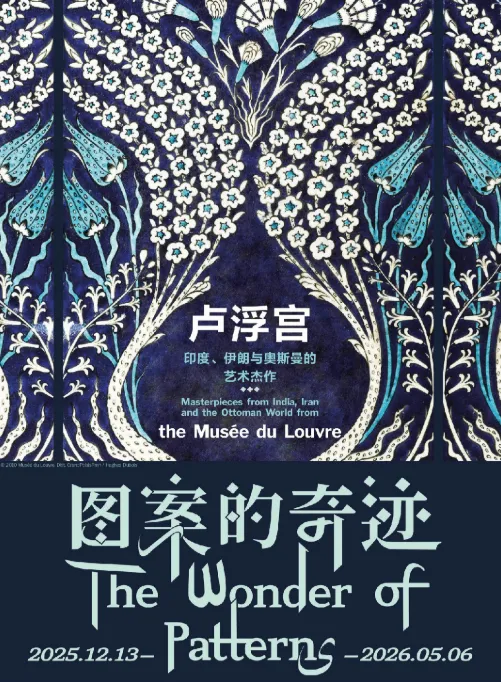
Starting December 13, the Museum of Art Pudong (MAP), in collaboration with the Louvre Museum in France, will present the first of two major year-end exhibitions, titled “The Wonder of Patterns: Masterpieces from India, Iran and the Ottoman World from the Musée du Louvre”. Featuring approximately 300 exquisite pieces from the Louvre’s collection, it will be the largest exhibition ever presented by the Louvre in China.
Source: MAP
2.“The Way in Patterns: An Immersive Digital Exhibition by the Palace Museum” to Open to the Public
[Keywords: Palace Museum, Patterns]

From December 9, 2025 to March 1, 2026, the exhibition “The Way in Patterns: An Immersive Digital Exhibition by the Palace Museum” will be open to the public at the Fosun Foundation (Shanghai). Centered on the theme of traditional patterns, the exhibition presents selected motifs from ancient architecture, ceramics and textiles of the Palace Museum and showcases innovative digital interpretations of these cultural elements.
Source: Shanghai Huangpu