Shanghai Weekly Bulletin (Issue 127 No.2, January 2026) ( 2026.01.14 )
Laws and Regulations
National
1. Regulations on Commercial Mediation Released
[Keywords: Commercial mediation]
The Regulations on Commercial Mediation were recently released. The document applies to activities in which parties, under the auspices of commercial mediation organizations, voluntarily and amicably negotiate and resolve commercial disputes in the fields such as trade, investment, finance, transportation, real estate, engineering construction, and intellectual property rights. The document will take effect on May 1, 2026.
Source: International Services Shanghai
https://english.shanghai.gov.cn/en-PolicyInsights/20260107/cfa92967afff4c5699e48e94cd6ee6d7.html
2. Measures for the Supervision and Administration of Rules of Online Trading Platforms Released
[Keywords: Online trading platforms, Rules]
Recently, the State Administration for Market Regulation (SAMR) and the Cyberspace Administration of China jointly released the Measures on the Supervision and Administration of Rules of Online Trading Platforms. The document clarifies the responsibilities and obligations that platforms should fulfill during the formulation, modification, and implementation of platform rules. It specifies detailed requirements for platforms to ensure information, network, and data security, and to protect the legitimate rights and interests of both operators and consumers on the platforms. Furthermore, it strengthens law enforcement coordination and improves supervisory mechanisms. The document will take effect on February 1, 2026.
Source: SAMR
https://www.samr.gov.cn/zw/zfxxgk/fdzdgknr/fgs/art/2026/art_85b474fc5a08494bb60ca6a280b98d7d.html
3.State Taxation Administration Updates and Releases 90 Tax Guidelines for Cross-border Investment
[Keywords: Cross-border investment, Tax]
On January 5, the State Taxation Administration (STA) updated and released 90 Country (Region) Investment Tax Guidelines. The documents cover updates on the tax regimes of 85 countries and regions that have undergone significant changes in recent years, including the United States, Canada, and France. Additionally, new tax guidelines for five countries, namely, Portugal, Chile, the Democratic Republic of the Congo, Zimbabwe, and Colombia, have been added.
Source: STA
4.Eight Authorities Issue Implementation Opinions on “AI+Manufacturing” Initiative
[Keywords: AI, Manufacturing]
On December 25, 2025, the Ministry of Industry and Information Technology (MIIT) and seven other authorities jointly issued the Implementation Opinions on the “AI+Manufacturing” Initiative. Centered on seven key tasks including strengthening the foundation for innovation, empowering intelligent upgrading, achieving product breakthroughs, fostering market entities, expanding industrial ecosystem, ensuring security, and advancing international cooperation, the document details 21 specific measures to promote mutual empowerment of AI technologies and manufacturing applications.
Source:MIIT WeChat Official Account
Shanghai
1. Shanghai Unveils 20 Measures to Encourage Domestic Reinvestment by Foreign-funded Enterprises
[Keywords: Foreign-funded enterprises, Reinvestment]
Recently, the Shanghai Municipal Development and Reform Commission and 10 other authorities jointly issued the Several Measures of Shanghai on Encouraging Domestic Reinvestment by Foreign-funded Enterprises. The document comprises 20 measures primarily focused on encouraging domestic reinvestment by enterprises and improving investment promotion and facilitation services.
Source: International Services Shanghai
https://english.shanghai.gov.cn/en-PolicyInsights/20260107/6d8819bbf1d344e9a82fef2832774cb2.html
2.Shanghai Supports Foreign-funded R&D Centers to Enhance Capabilities
[Keyword: Foreign-funded R&D Centers]
Recently, the General Office of the Shanghai Municipal People’s Government issued the Policy Measures of Shanghai on Further Supporting the Upgrading of Foreign-funded R&D Centers. The document puts forward 26 specific initiatives across ten areas, including supporting increased investment in R&D, encouraging open innovation, and supporting integrated R&D and manufacturing. The document took effect on January 1, 2026, and will remain valid until December 31, 2030.
Source: Shanghai Municipal People’s Government
https://www.shanghai.gov.cn/nw12344/20260108/534cb2133b5645439a378371b24eeb1e.html
3.Shanghai Leverages Yangtze River Delta Resources to Build Advanced Manufacturing Cluster for Low-altitude Economy
[Keyword: Low-altitude economy]
Recently, the Shanghai Municipal Commission of Economy and Informatization, together with the Hongqiao International Central Business District Administration and the governments of Pudong New Area and three other districts, jointly issued the Several Measures of Shanghai on Leveraging the Yangtze River Delta to Accelerate the Development of an Advanced Manufacturing Cluster for the Low-altitude Economy. The document proposes 16 specific measures across four key areas, namely, develop R&D and manufacturing of low-altitude equipment, build a premier industrial ecosystem for the low-altitude economy, promote collaboration in the Yangtze River Delta, and orderly promote the application of low-altitude economy scenarios. The document took effect from the date of issuance and will remain valid until December 31, 2028.
Source: Shanghai Municipal Commission of Economy and Informatization
4.Full Text of the Several Regulations of Shanghai Pudong New Area on the Development of Free Trade Offshore Bond Business Released
[Keywords: Free trade offshore bonds]
Recently, the full text of the Several Regulations of Shanghai Pudong New Area on the Development of Free Trade Offshore Bond Business was released. The document clarifies five categories of entities eligible to issue free trade offshore bonds and five categories of entities eligible to invest in these bonds. It will take effect on March 1, 2026.
Source: Shanghai Municipal People’s Congress
Q&A
At a press briefing held by the Information Office of the Shanghai Municipal Government to introduce the Shanghai Action Plan to Accelerate the Development of a World-class Business Environment (2026), an official of the Shanghai Municipal Development and Reform Commission answered reporters’ questions
Q
This year’s Action Plan represents an iterative upgrade of previous versions and further clarifies the working framework for the “four major environments”. How will the Action Plan be effectively implemented, and what considerations underpin its rollout?
A
On the first day of 2026, the CPC Shanghai Municipal Committee and the Municipal Government convened a citywide conference on optimizing the business environment, with the aim to ensure early plan, implementation, and results. Optimizing the business environment has been given top priority in promoting high-quality development, better boosting market confidence, guiding public expectations, and providing strong support for a good start to the 15th Five-Year Plan. The Shanghai Municipal Development and Reform Commission will thoroughly implement the guiding principles of the citywide conference, comprehensively strengthen overall coordination and integrated development, and ensure the effective implementation of the 26 specific tasks and measures. We will strive to shape new competitive advantages for Shanghai’s business environment.
First, we will enhance the efficiency of the special task force for improving the business environment. This year, we will further strengthen coordination across all levels of government and collaboration among different sectors. On the one hand, we will continue to reinforce the leading role of the municipal task force, and ensure that it can “effectively take on complex issues, assign tasks in a timely manner, and obtain feedback on outcomes”, thereby continuously improving the effectiveness and authority of our work. On the other hand, we will establish and improve the working mechanisms of business environment task forces in each district and administrative committee, strengthen business environment service capacity of each subdistrict, town, industrial park, and commercial building, and put in place a vertically integrated and horizontally connected business services system that provides full coverage and all-day support. We will work together as a unified force, put in all efforts towards the same goals, and collaborate on the same challenges to promote overall improvement of the business environment.
Second, we will strengthen efforts to achieve breakthroughs in key tasks. While comprehensively promoting the implementation of the 26 tasks and measures, we will continue last year’s practice of carrying out targeted initiatives for priority tasks. We will focus on issues that are of urgent concern to enterprises and require a high degree of interdepartmental coordination, and give priority attention to matters such as bidding and tendering, approval and regulation of new business models, inspection and testing, and the resolution of corporate concerns. Through strengthened coordination, focused supervision, and enhanced communication, we will work to address bottleneck issues and ensure that significant results are achieved within the year.
Third, we will strengthen the assessment of policy implementation outcomes. In improving the business environment, the release of the 26 measures is only the beginning, and the ultimate benchmark lies in their actual results. In recent years, the supervision and inspections by the CPC Shanghai Municipal Committee and the Municipal Government, the law enforcement inspections by the Shanghai Municipal People’s Congress, and the proposals and advice from the CPPCC Shanghai Municipal Committee have all prioritized the optimization of the business environment and jointly promoted policy implementation. This year, we will further enhance the evaluation of policy outcomes and regularly solicit opinions and suggestions from enterprises, experts, and industry and trade associations. Moreover, we will better leverage the roles of media observers and business environment experience officers to ensure that policies for optimizing the business environment are effectively implemented and deliver tangible results.
Fourth, we will strengthen capacity building for the business environment workforce. Work related to the business environment involves various aspects such as economy, science and technology, law, and society. It is characterized by broad coverage and high degree of professionalism, requiring staff to possess more specialized knowledge, a broader vision, comprehensive qualities, and a solid work style. This year, we will coordinate and conduct training for staff member engaged in business environment service across all fields to enhance the professional quality of service teams at the municipal, district, sub-district and town levels. Through systematic training, we aim to improve overall service capabilities and develop a workforce of capable professionals who can deal with any query. Through these collective efforts, we hope that every staff member engaged in business environment services will become an image ambassador and promoter for Shanghai’s business environment.
Source: Shanghai Release
Expert Perspective
Major Revision of Shanghai FTZ Regulations: The Upgrade Path of China’s High-standard Opening-up
By Jiang Fengwen (Chance Bridge Law Firm)
[Continued from the Previous Issue]
V. The Far-reaching Impact of the Regulatory Amendments on China’s High-standard Opening-up
3. Injection of New Momentum into Coordinated Regional Development
The revision and implementation of the Shanghai Pilot FTZ Regulations hold great significance not only for the development of Shanghai itself but also for providing new momentum into the integrated development of the Yangtze River Delta and the coordinated regional development nationwide. Article 7 of the Regulations explicitly stipulates the need to “promote the integration of the Pilot Free Trade Zone’s development with national strategies such as the high-quality integrated development of the Yangtze River Delta and the high-quality development of the Yangtze River Economic Belt.” This provision establishes, at the legislative level, the leading role and influence of the Shanghai Pilot FTZ in regional development.
In terms of specific implementation, the Shanghai Pilot FTZ will drive regional development through measures such as industrial collaboration, institutional sharing, and joint platform development. For example, in terms of industrial collaboration, the Shanghai Pilot FTZ will focus on key sectors including integrated circuits, biomedicine, and high-end manufacturing. It will undertake the task of integrated innovation and reform across the entire industrial chain, and form a complementary industrial chain layout with the Yangtze River Delta region. In terms of institutional sharing, the achievements of institutional innovation from the Shanghai Pilot FTZ will be prioritized for replication and promotion within the Yangtze River Delta to expand the coverage of policy benefits.
It is particularly worth mentioning that the Shanghai Pilot FTZ will also promote coordinated regional development through the joint development and sharing of open platforms. For example, improvements to the “China Yangshan Port” international ship registration system will enhance the international competitiveness of the entire Yangtze River Delta port cluster. The opening-up and innovation of the Shanghai International Financial Center will drive the integrated financial development across the Yangtze River Delta region. Furthermore, the development of Shanghai as a leading hub for the digital economy will provide technical support for the digital transformation of the Yangtze River Delta. This model of driving regional coordinated development through open platforms is set to become a new paradigm for regional development in China.
VI. Conclusion: A New Paradigm for China’s Opening-up Oriented Toward the Future
The revision and implementation of the Shanghai Pilot FTZ Regulations mark a significant milestone in China’s opening-up process. It is not merely an upgrade of a local regulation, but also a manifesto and roadmap for China to promote high-standard institutional opening-up. Through Shanghai as a “testing ground”, China has successfully explored a path to upgrade from flow-based opening-up (focused on trade and investment flows) to institutional opening-up, and contributed Chinese insights to the building of an open world economy.
Looking back at the development of the Shanghai Pilot FTZ, its greatest achievement lies not only in the volume of foreign investment it has attracted or the scale of trade achieved, but more importantly in the fact that it has formed a number of replicable and scalable experiences through institutional innovation. These efforts have led to the formation of a new landscape of all-dimensional, multi-level, and wide-ranging opening-up across the country. To date, China has established 23 pilot FTZs, including the Hainan Free Trade Port. Through differentiated exploration and complementary development, these pilot FTZs together have formed a matrix underpinning China’s opening-up.
Looking ahead, China’s opening-up will still face numerous challenges. The accelerated reshaping of global economic and trade rules, the emergence of new issues such as digital trade and green trade, and rising geopolitical risks are all placing higher demands on China’s capacity for opening-up. Yet challenges often go hand in hand with opportunities. Through continuous innovation on open platforms such as the Shanghai Pilot FTZ, China is well positioned to build new international competitive strengths in emerging areas including the digital and green economies, and to play a greater role in global economic governance.
One Week in Shanghai
Latest News
1.Ten Foreign Language Versions of Shanghai’s Business Environment Optimization Action Plan Launched
[Keywords: Business environment action plan]
On January 4, multilingual infographic versions of the Shanghai Action Plan to Accelerate the Development of a World-class Business Environment (2026) were launched on the International Services Shanghai portal (english.shanghai.gov.cn). Building on last year’s English version, nine additional language versions have been released this year, namely, French, German, Japanese, Korean, Spanish, Russian, Portuguese, Arabic and Italian. Furthermore, an English explanatory video is made available to help global enterprises better understand Shanghai’s policies and to bolster their investment confidence.
Source: Foreign Affairs Office of Shanghai Municipal People’s Government
2.Shanghai Port Ranks First Worldwide in Container Throughput for 16 Consecutive Years
[Keywords: Shanghai port]
In 2025, the container throughput at Shanghai Port exceeded 55.06 million TEUs, setting a new historical record and securing the top global ranking for the 16th consecutive year. With the steady advancement of projects such as the north operation area of Xiaoyangshan Island and the second phase of the container port renovation project at Luojing Port, Shanghai Port is expected to further expand handling capacity and improve operational efficiency.
Source: International Services Shanghai
https://english.shanghai.gov.cn/en-Latest-WhatsNew/20260107/981624ec9df14b6a9810893afcf1cad8.html
3.National Fintech Certification Shanghai Center Established
[Keywords: Fintech, Certification center]
On January 8, the National Fintech Certification Shanghai Center was officially established in Huangpu District. The center will provide professional services focusing on fintech testing and certification, financial data security, financial applications of large models, and digital green finance. It aims to enhance compliance among financial institutions and fintech companies, promote industrial integration, showcase technological achievements, and support the continued expansion of Shanghai's fintech ecosystem.
Source:Shanghai Huangpu
Corporate Activities
1.Two Foreign-funded Financial Institutions Approved to Commence Operations in Shanghai
[Keywords: AIA, Aegon Asset Management]
AIA Insurance Asset Management Co. Ltd., and Aegon Asset Management (Shanghai) were recently approved to commence operations. As the first batch of wholly foreign-owned insurance asset management companies approved in Shanghai, this marks a further step in China’s financial opening-up and strengthening the city’s position as an international financial center.
Source: Invest Shanghai
Forum & Exhibition
1.Invitation Released for the First Overseas Investment Conference
[Keywords: Overseas Investment Conference]
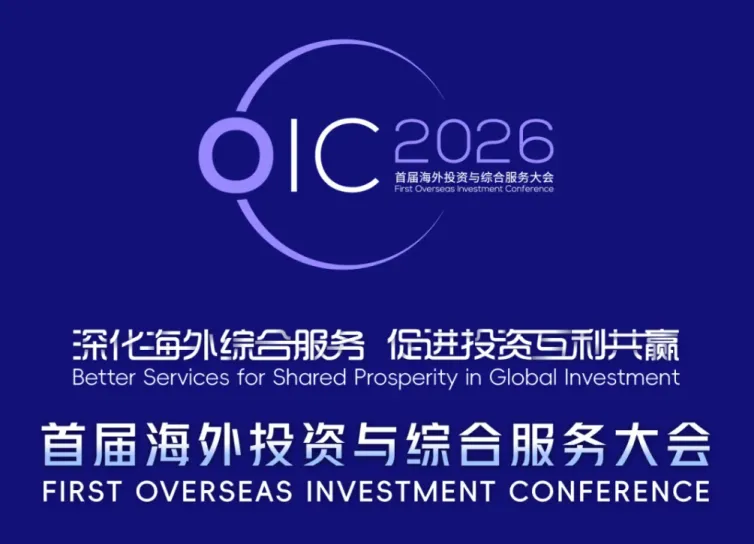
The first Overseas Investment Conference is scheduled to be held from March 25 to March 28 at the Shanghai Eastern Hub International Business Cooperation Zone. With the theme of “Better Services for Shared Prosperity in Global Investment”, the conference will feature a series of activities including thematic forums, matchmaking events, brand showcases and business visits. It aims to help Chinese and foreign enterprises better grasp global trends, understand industrial policies, mitigate investment risks, and explore business cooperation opportunities.
Source: Shanghai International Technology Import and Export Promotion Center
Culture & Art
1.Shanghai Opera House Launches 70th Anniversary Carnival
[Keywords: Shanghai Opera House]

On January 4, the Shanghai Opera House officially launched a year-long Art Carnival for 2026 under the theme “Fabulous 70”. Structured around four core sections, namely, “Classic Style • FAN”, “Originality • LEA”, “Art Education • PIE”, and “Rising Star • SING”, the program presents a diverse artistic feast encompassing opera, dance drama, concerts, art salons, and talent cultivation.
Source: Shanghai Opera House