Shanghai Weekly Bulletin (Issue 137 No1, April 2026) ( 2026.04.08 )
Laws and Regulations
National
1. General Office of the State Council: Empowering High-Quality Development Through Unified and Standardized Credit Evaluation
[Keywords: Corporate creditworthiness, Evaluation system]
Recently, the General Office of the State Council issued the Implementation Plan on Establishing a Comprehensive Evaluation System for Corporate Creditworthiness. The document sets out twelve measures, including establishing the institutional framework for the comprehensive evaluation system of corporate creditworthiness, improving the public credit evaluation system, standardizing public credit evaluation rules, and unifying the administration of industry credit evaluations.
Source: Website of the Chinese Government
Shanghai
1. Shanghai Issues Guidelines on Handling Enterprise-related Matters for Foreign-Funded R&D Centers
[Keywords: Foreign-funded R&D]
Recently, the Guidelines on Handling Certain Enterprise-related Matters under the Policy Measures of Shanghai on Further Supporting the Upgrading of Foreign-Funded R&D Centers was released. Centering on full-process support for foreign-funded R&D hubs to carry out R&D, testing, pilot-scale trials, and commercialization of research outcomes in Shanghai, the document specifies the policy basis, applicable conditions, and application procedures for 41 enterprise-related items.
Source: Shanghai Municipal Commission of Commerce
https://sww.sh.gov.cn/zxxxgk/20260323/0c58adb564ae4db2ac96991a04dbb2ae.html
2. Shanghai High People’s Court Releases Typical Commercial and Maritime Cases of Shanghai Courts involving Foreign, Hong Kong, Macao and Taiwan (2023-2025)
[Keywords: Foreign-related, Commercial and maritime affairs]
Recently, the Shanghai High People’s Court released the bilingual (Chinese–English) version of the Typical Cases of Commercial and Maritime Trials involving Foreign, Hong Kong, Macao, and Taiwan (2023–2025). The 15 cases released cover a range of high-frequency scenarios in foreign-related commercial and maritime affairs, including cross-border trade, shipping and logistics, air transport, and corporate operations, and are categorized into five major types.
Source: Shanghai High People’s Court
3. Lingang Introduces Support Policies for Developing the “Super Individual” Economy
[Keywords: OPC, Super individual]
Recently, the Lingang Special Area Administration issued the Several Measures of the China (Shanghai) Pilot Free Trade Zone Lingang Special Area for the Development of the “Super Individual” Economy. The document proposes eight areas of support, including strengthening basic supports for entrepreneurship, enhancing services for technology-related production factors, and improving talent service assurance.
Source: Lingang Special Area Administration
https://www.lingang.gov.cn/html/website/lg/index/government/file/2036869487968493569.html
Q&A
An official of the Hongqiao International CBD Administration answered questions from reporters at a municipal government press conference.
Q
Shanghai is accelerating efforts to build a sci-tech innovation highland with global influence. What progress and exploration has been made in the Hongqiao International CBD regarding the integrated development of science-innovation development and industries?
A
Leveraging its unique location and resource advantages, the business district has strengthened the role of enterprises as key drivers of innovation and fostered a virtuous cycle in which sci-tech innovation empowers industries, and industries in turn support sci-tech innovation. Three replicable and scalable models for integrated development of sci-tech innovation and industries have taken shape, providing vivid examples for fostering new-quality productive forces.
First, the platform driven model for key linkages. By relying on high-level platforms such as the Chinese Academy of Engineering Academician and Expert Achievement Display and Transformation Center, the Shanghai International Technology Exchange Market, and its online service platform (InnoMatch), the district has smoothed the “last mile” of transforming sci-tech achievements. It efficiently connects high-end innovation production factors such as global technologies, talent, and capital, and built a comprehensive service platform that integrates innovation collaboration, resource matching, and outcome trading, thereby accelerating the two-way flow and mutually beneficial sharing of innovation resources.
Second, the leading enterprise driven model. Guided by leading and chain-anchor enterprises such as the Midea Global Innovation Campus, Innovent Biologics Global R&D Center, and Zhongjian Technology, the district has leveraged enterprises as the main force in R&D, concentrated resources on tackling critical and core technologies and achieving original breakthroughs, driven upstream and downstream enterprises along the industrial chain to collaborate and innovate in clusters, and promoted the local incubation and rapid implementation of innovation outcomes.
Third, the regional industry coordination model. Focusing on key tracks such as new energy vehicles and the low-altitude economy, the district has coordinated high-quality resources across the Yangtze River Delta, gathered enterprises along the entire value chain, and built a regional industrial ecosystem that integrates “R&D + manufacturing + application + services”. This has created a cross-regional coordinated development paradigm of “Hongqiao based R&D + Yangtze River Delta based manufacturing + global application”, enabling complementary advantages, resource sharing, and coordinated development.
Moving forward, the business district will focus closely on nurturing new-quality productive forces. It will make all-out efforts to advance the development of a manufacturing R&D cluster in the Yangtze River Delta, deepen coordinated linkages with manufacturing bases across the region, and stimulate the vitality of enterprises as the main entities of innovation. Furthermore, it will improve the policy support system for sci-tech innovation, and continuously optimize spatial carriers and the innovation ecosystem. These efforts will further enhance the level of integrated development between sci-tech innovation and industries, and better serve national strategies and regional coordinated development.
Source:Shanghai Release
Expert Perspective
Interpretation Series on the New Foreign Trade Law (I): Advancing the Trade Powerhouse Strategy Through Institutional Opening-up
By Li Zhenghao, Su Chang, and Yuan Xiaokun (King & Wood Mallesons)
Summary
This article focuses on the newly revised Foreign Trade Law of the PRC (the “new Foreign Trade Law”), with particular emphasis on the institutional innovations introduced by the new law to advance the trade powerhouse strategy, enhance foreign trade compliance, and safeguard national sovereignty and security. The new law clearly establishes a trade policy compliance mechanism, strengthens the obligation of government departments to conduct compliance assessments when formulating trade policies, and promotes proactive alignment with high-standard international trade rules. At the same time, it refines the legal authorization for counteractive trade measures to impose restrictions on overseas individuals and organizations that harm national interests, and introduces an anti-circumvention clause to enhance institutional robustness. The article also analyzes the impact of the new law on government bodies and enterprises, highlighting its practicality, targeted approach, and forward-looking nature, and considers that it provides a solid legal guarantee for China’s institutional opening-up and trade powerhouse strategy.
Keywords
Foreign Trade Law of the PRC; trade policy compliance mechanism; counteractive trade measures; trade powerhouse strategy; WTO rules; anti-circumvention clause; cross-border services trade; digital commerce; green-oriented trade
Introduction
On December 27, 2025, the Standing Committee of the National People’s Congress promulgated the newly revised Foreign Trade Law of the PRC (the “new Foreign Trade Law”), which took effect on March 1, 2026. Looking back at the legislative process, the current Foreign Trade Law was first enacted in 1994, and the present revision constitutes the second large-scale adjustment following the comprehensive revision in 2004. If the comprehensive revision in 2004 was aimed at adapting the legal system to China’s accession to the World Trade Organization (WTO), the current systematic amendment represents a proactive institutional design to further promote the trade powerhouse strategy against the backdrop of profound global changes unseen in a century.
I. Background and Main Contents of the Revision of the new Foreign Trade Law
From a global perspective on the current trade landscape, China’s trade in goods has remained the largest in the world, while its trade in services ranks second globally. In addition to these remarkable achievements, China’s foreign trade legal regime is also facing new challenges of the times. In the course of advancing high-standard opening-up, reforms of the foreign trade regime have continued to deepen, new forms and models of foreign trade have continued to emerge, and cross-border services trade, digital commerce, and green-oriented trade have been flourishing. Externally, beyond the existing WTO multilateral trade regime, China is actively seeking accession to new trade agreements such as the Comprehensive and Progressive Agreement for Trans-Pacific Partnership (CPTPP) and the Digital Economy Partnership Agreement (DEPA). Meanwhile, rising trade protectionism and unilateralism have created difficulties for corporate operations. These new developments and issues have put forward new requirements for the functional positioning of the Foreign Trade Law.
Against this backdrop, the new revision of the Foreign Trade Law clearly raises the banner of multilateralism and takes the advancement of high-standard opening-up as its primary objective (Article 1), explicitly calling for proactive alignment with high-standard international economic and trade rules, and for safeguarding the multilateral trade regime and a fair and equitable international economic and trade order (Article 6). At the same time, in response to the new circumstances and tasks in the foreign trade arena, the revised law also enshrines the safeguarding of national sovereignty, security, and development interests as its legislative purpose (Article 1), and upholds the principle that foreign trade shall serve national economic and social development and advance the trade powerhouse strategy (Article 3). In this sense, the current revision reflects the Chinese government’s fundamental policy of coordinating development and security, deepening opening-up while firmly safeguarding national sovereignty and security, with both aspects being advanced in a robust and balanced manner.
To implement the above strategic objectives, the new Foreign Trade Law introduces a series of institutional arrangements characterized by the following features:
- First, existing reform policies and well-established practices are elevated into statutory provisions.
- Second, forward-looking mechanisms are provided to accommodate emerging trade forms and trade regimes in the future.
- Third, the relevant institutional arrangements are improved to better address shifts in the international economic and trade landscape.
It can thus be seen that the new Foreign Trade Law imposes higher requirements on the compliance performance of government departments in foreign trade work, and that the new mechanisms and systems introduced by the law will require further exploration and implementation by competent authorities in practice so as to form a comprehensive institutional framework and push institutional opening-up to greater depth. For foreign trade operators, the new Foreign Trade Law creates more and better development opportunities and institutional safeguards amidst a complex and volatile global trade landscape by raising the level of openness in cross-border services trade, explicitly encouraging emerging trade businesses and formats, and introducing mechanisms such as trade adjustment assistance. At the same time, in order to safeguard national sovereignty, security, and development interests, the law imposes more stringent compliance obligations on market operators.
[To be continued]
One Week in Shanghai
Latest News
1. SAFE Shanghai Branch Successfully Launches the “Facilitation of Foreign Exchange Payments for Domestic Freight” Application Scenario on the Cross-border Financial Service Platform
[Keywords: Domestic freight, Foreign exchange payment]
On April 1, the Shanghai Branch of the State Administration of Foreign Exchange (SAFE) officially launched the “Facilitation of Foreign Exchange Payments for Domestic Freight” application scenario on the Cross-border Financial Service Platform. Leveraging the Cross-border Financial Service Platform of the SAFE, this application scenario connects with the invoice data of the Shanghai Municipal Tax Service via the maritime and trade blockchain network. It enables online automatic verification of ocean freight invoice information and trusted mutual recognition of cross-bank foreign exchange payment data.
Source: The Shanghai Headquarters of the People's Bank of China
Corporate Activities
1. Estée Lauder (China) Open Innovation Center Unveiled in Minhang
[Keywords: Estée Lauder]
Recently, the Estée Lauder Group was officially recognized as one of the first batch of group open innovation (GOI) centers in Minhang District, and the Estée Lauder Open Innovation Center was unveiled. Relying on this center, the group will continue to deepen cooperation with local universities, research institutions, and medical organizations, further connect with regional innovation resources, upgrade the service capacity of local innovation platforms, and enhance collaborative innovation with local start-ups and emerging technology enterprises.
Source: Minhang Today
2. Golf Lifestyle Brand Malbon Officially Opens Its First Flagship Store in China
[Keyword: Malbon]
Recently, Malbon, a golf lifestyle brand from California, the United States, officially opened its first flagship store in China. Located in Jing An Kerry Centre (JAKC), the store integrates three functional sections,i.e., retail space, café area, and interactive putting zone, to create a seamless and immersive experience that naturally combines shopping, socializing, and leisure activities.
Source: Shanghai Jing’an
Competition Events
1. Over 30 International and Domestic Sporting Events Planned to Take Place in Pudong This Year
[Keywords: Sporting events]
Recently, Pudong New Area announced its 2026 calendar for international and domestic sporting events. More than 30 international, national, and district-level events are scheduled to be held in Pudong within the year, supporting efforts to build the area into a core zone of an International City of Major Sports Events.
Source: Pudong Release
Forums and Exhibitions
1. 22 Exhibitions to Be Staged Soon
[Keywords: Exhibitions]
In April, Shanghai will host 22 exhibitions in succession. These include the inaugural Shanghai Auto Lifestyle Show, the China International Occupational Safety & Health Goods Expo, the China International Medical Equipment Fair, the IE expo China (Shanghai), and the CHINAPLAS International Exhibition on Plastics and Rubber Industries.
Source: Shanghai Commerce
Culture & Arts
1. “Traditional Thangka Art Exhibition” Opens
[Keyword: Thangka]

Recently, “Traditional Thangka Art Exhibition” officially opened to the public. The exhibition focuses on the millennia long heritage and contemporary value of traditional Thangka art. Featuring precious exhibits such as The Great Tangka of Tibetan Art and Culture of China and Medical Thangka, it invites visitors to explore the vibrant world of Thangka and experience the profound heritage and unique charm of this intangible cultural heritage.
Source: International Services Shanghai
https://english.shanghai.gov.cn/en-ArtExhibitions/20260330/bdfd3c32ec61474a949c9ccac45a58bb.html
2. “The 60th Venice Biennale China National Pavilion Exhibition - Shanghai” Opens
[Keywords: Venice Biennale]
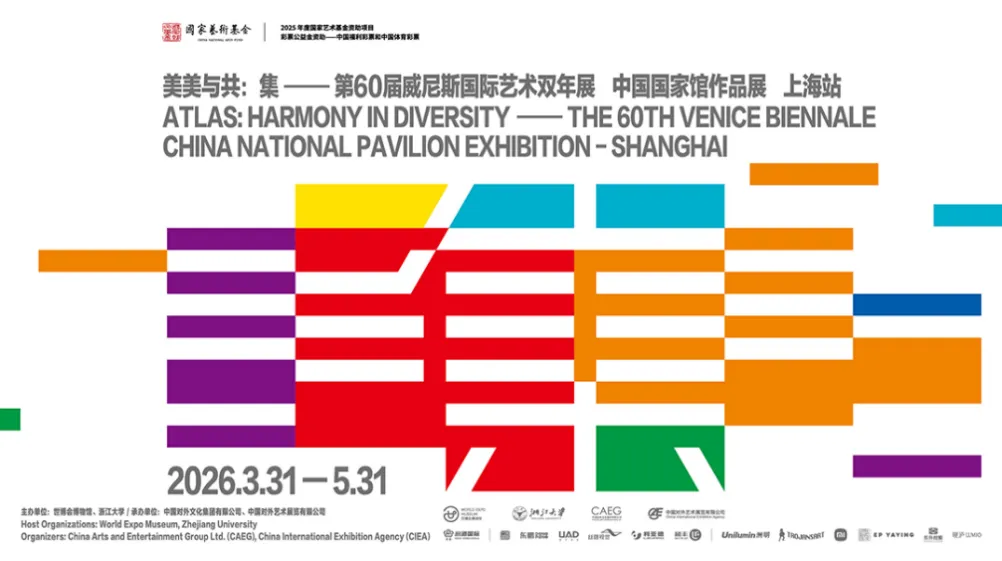
Recently, the exhibition “ATLAS: Harmony in Diversity — the 60th Venice Biennale China National Pavilion Exhibition - Shanghai” officially opened. The Collect section showcases documentary archives related to Chinese paintings collected overseas, comprising a total of 12,405 pieces or sets of images of ancient Chinese painting masterpieces. About one quarter of these, more than 3,000 pieces or sets, are currently housed in countries and regions outside China.
Source: International Services Shanghai
https://english.shanghai.gov.cn/en-Latest-WhatsNew/20260401/5e534fab7c3446679c891c2a98e1abd3.html
3. Shanghai Culture Square Releases 2026 Performance Season Lineup
[Keywords: Shanghai Culture Square, Performances]

Recently, Shanghai Culture Square unveiled its highly anticipated performance season for 2026. This year it will present a lineup of acclaimed productions, including the musical The Impossible Trial, the original French musical Le Roi Soleil, the concert version of the original German musical Ludwig II: The King is Back, and the original German musical Einstein: A Matter of Time.
Source: Shanghai Culture Square