Shanghai Weekly Bulletin (Issue 145 No.2, June 2026) ( 2026.06.10 )
Laws and Regulations
National
1.State Council Regulation on Outbound Investment to Take Effect on July 1
[Keywords: Outbound investment]
Recently, the State Council Regulation on Outbound Investment was released and will take effect on July 1, 2026. The document makes it clear that China will improve its integrated overseas service system, promote the integrated development of trade and investment, enhance public platforms and services, and coordinate service resources in areas including foreign affairs, legal services, finance and taxation, financial services, economic and trade affairs, logistics, exit and entry, customs, and trade promotion, so as to provide service support for investors.
Source: Website of the Chinese Government
https://www.gov.cn/zhengce/content/202606/content_7070755.htm
2.Five Authorities Jointly Release Regulations on the Administration of Multi-Channel Distribution of Online Information Content
[Keywords: Internet, Information content, Distribution services]
Recently, the Cyberspace Administration of China (CAC) and four other authorities jointly released the Regulations on the Administration of Multi-Channel Distribution of Online Information Content, which will take effect on September 1, 2026. The document stipulates that providers of multi-channel distribution services for online information content shall verify, in accordance with law, the identities of producers and operators of public accounts operated by internet users, perform information security management obligations in accordance with law and agreements, and assist and urge such producers and operators to comply with information security management requirements.
Source: CAC
Shanghai
1.Shanghai Issues Document to Deepen Development of Global Asset Management Center
[Keywords: Global asset management center]
Recently, the General Office of the Shanghai Municipal People’s Government issued the Several Opinions on Deepening the Development of Shanghai as a Global Asset Management Center. The objective of the document is to accelerate the internationalization of the renminbi (RMB), facilitate diversified cross-border asset allocation, enhance Shanghai’s role in the global allocation and risk management of RMB-denominated assets, and further strengthen the competitiveness and influence of Shanghai as an international financial center. The document took effect on June 1, 2026.
Source: Shanghai Municipal People’s Government
https://www.shanghai.gov.cn/nw12344/20260602/75aaea49da7a4ca3b884e2b301308c15.html
2.Shanghai Releases the 15th Five Year Plan for the Development of the Service Sector
[Keywords: Service sector]
Recently, the General Office of the Shanghai Municipal People’s Government issued the Shanghai’s 15th Five-Year Plan for the Development of the Service Sector. The document sets the target that by 2030, significant progress will be made in optimizing the structure of the service sector, fostering new growth drivers, and improving quality and efficiency. The sector’s levels of digitalization, standardization, integration, and internationalization will continue to rise, with its value added reaching approximately RMB 6 trillion. A new high-quality and highly efficient service sector system will have largely taken shape, featuring the core service functions of a high-level global city as its driving force, high-end producer services as its mainstay, and high-quality consumer services as its support.
Source: Shanghai Municipal People’s Government
https://www.shanghai.gov.cn/nw12344/20260601/e389cb85379447e2a3f1fc75011c04a0.html
3.Four Authorities Roll Out Action Plan to Promote High-Quality Development of the MICE Sector
[Keywords: MICE sector]
Recently, the Shanghai Municipal Commission of Commerce, together with three other authorities, issued the Three-Year Action Plan for Promoting the High-Quality Development of Shanghai’s MICE Industry (2026–2028). The document sets out 12 measures across four key areas: strengthening destination marketing, fostering an enabling ecosystem for industry development, enhancing multi-sector coordination, and improving the business environment.
Source: Shanghai Municipal Commission of Commerce
https://sww.sh.gov.cn/zwgkgfqtzcwj/20260602/18b4a0871a80461c95a936e95f17531a.html
4.Shanghai to Further Enhance Capacity of Financial Arbitration Services
[Keywords: Finance, Arbitration]
Recently, the Financial Regulatory Office of the CPC Shanghai Committee and five other authorities jointly issued the Measures on Further Enhancing the Capacity of Financial Arbitration Services to Support the Accelerated Development of Shanghai as an International Financial Center. The document sets out 17 specific measures across six areas. It aims at further strengthening the role and capacity of financial arbitration, and providing better support and safeguards for the development of Shanghai as an international financial center.
Source: Shanghai Finance
Q&A
Interpretation of the Several Opinions on Deepening the Development of Shanghai as a Global Asset Management Center by the General Office of the Shanghai Municipal People’s Government
Q1
What progress has Shanghai made in developing itself into a global asset management center?
A1
In 2021, Shanghai became the first city in China to propose the development of a global asset management center. Over the past five years, significant progress has been achieved. Shanghai’s assets under management (AUM) have increased from less than one-quarter of the national total to around 30%. Among them, insurance asset management accounts for approximately 50% of the national total, public fund management around 40%, while the scale of private funds ranks first in China. Nearly 50% of the country’s securities company asset management subsidiaries are based in Shanghai. The city is home to about 45% of China’s public fund management companies, while more than 30% of the nation’s insurance asset management companies and wealth management subsidiaries of commercial banks are located in Shanghai. All six newly established wholly foreign-owned public fund management companies in China and all five joint venture wealth management companies set up by banks have chosen Shanghai as their base. The city has become the preferred destination for foreign asset management institutions seeking to establish and expand their presence in the Chinese market.
Q2
Financial markets provide the foundation for the development of Shanghai as a global asset management center. What measures does the Several Opinions propose to strengthen financial market development?
A2
As one of the world’s cities with the most comprehensive financial market systems, Shanghai is home to a full range of financial factor markets, including equities, bonds, money markets, foreign exchange, gold, futures, bills, and insurance. It offers a wide variety of underlying assets, covering equities, fixed income products, derivatives, and alternative assets such as bills, gold, and commodities.
To better meet the diversified asset allocation needs of global investors, the Several Opinions proposes the following measures:
First, it calls for continuously enriching the range of basic products across asset classes, including equities, bonds, and alternative assets, while further improving the product ecosystem spanning exchange-traded and over-the-counter markets, commodities and financial products, as well as futures and derivatives.
Second, it seeks to enhance the influence of “Shanghai prices” in both commodities and financial products, thereby strengthening Shanghai's asset pricing capabilities.
Third, it emphasizes further enhancing the functions of financial market infrastructure and improving its security, resilience, and controllability, so as to ensure the stable and sound operation of financial markets and related infrastructure.
Source: Shanghai Municipal People's Government
https://www.shanghai.gov.cn/wzjd/20260602/7c03d299b55b4748a75ad11e21d319b5.html
Expert Perspective
Observations on Foreign-Related Dispute Resolution in China in 2025: Institutional Innovation, Practical Developments and Future Prospects
By Liu Guolin and Duan Jiaqi [Grandall Law Firm]
[Continued from the previous issue]
[Article Summary]
In 2025, China continued to strengthen the legal framework for resolving foreign-related disputes, with a focus on enhancing professionalism and accessibility. On the judicial front, circuit tribunals and international commercial courts in multiple jurisdictions advanced specialized reforms in foreign-related adjudication, significantly shortening case handling periods and enabling expedited rulings on urgent preservation applications. Meanwhile, the China International Commercial Court (CICC) further improved its “one-stop” dispute resolution platform, promoting closer coordination among litigation, arbitration and mediation, while strengthening support for the ascertainment of foreign law.
At the same time, the regulatory framework for resolving cross-border data disputes became increasingly clear. The arbitrability of disputes involving data ownership, contractual breaches and related issues has been recognized, while enterprises have gained access to multiple compliance pathways for cross-border data transfers, including security assessments, certification mechanisms and standard contractual arrangements. In addition, pilot negative list regimes introduced in free trade zones have provided a more flexible institutional framework for facilitating cross-border data flows.
[Article Details]
I. Key Developments and Highlights in China’s Foreign-Related Dispute Resolution Framework in 2025
(III) Continued Enhancement of the Professionalization of Foreign-Related Adjudication
The First and Second Circuit Courts of the Supreme People’s Court continued to advance reforms aimed at strengthening the professional handling of foreign-related cases. At the same time, specialized international commercial courts have been established in Beijing, Shanghai, Guangzhou, Shenzhen and other cities to centralize the adjudication of significant foreign-related commercial and civil disputes. As judicial mechanisms have been further refined, the average duration of foreign-related proceedings has been reduced by approximately 15% compared with the previous two years. In addition, courts have introduced expedited channels for foreign-related cases, enabling rulings on urgent applications for interim measures within 48 hours, thereby significantly improving the timeliness of judicial relief in cross-border disputes.
At the level of the CICC, the “one-stop” diversified international commercial dispute resolution platform has continued to evolve. By the end of 2025, the platform had incorporated a number of arbitration and mediation institutions, including the China International Economic and Trade Arbitration Commission (CIETAC) and the Shenzhen Court of International Arbitration (SCIA), creating a seamless dispute resolution framework that integrates litigation, arbitration and mediation. After commencing proceedings before the CICC, parties may voluntarily choose to refer their disputes to arbitration institutions or mediation organizations participating in the platform. In addition, mediated settlement agreements and arbitral awards may be submitted directly to the CICC for judicial confirmation or preservation measures, substantially enhancing the efficiency of dispute resolution. In 2025, major cases handled by the CICC involving Belt and Road cooperation, cross-border investment and financing, and other significant international commercial matters were resolved on average approximately 30% faster than ordinary foreign-related cases. Meanwhile, the foreign law ascertainment platform provided legal research and ascertainment services covering more than 50 jurisdictions, offering strong professional support for the adjudication of foreign-related disputes.
(IV) Greater Clarity in the Legal Framework for Cross-Border Data Dispute Resolution
Following the implementation of the Data Security Law and the Personal Information Protection Law, China further refined its regulatory framework governing cross-border data flows during 2024 and 2025. A data classification and grading regime has now been established. Under this framework, ordinary data may generally be transferred across borders without restriction, while the transfer of important data is subject to compliance requirements such as government security assessments, certification by qualified professional institutions, or the execution of standard contractual arrangements. Core data, by contrast, is in principle prohibited from being transferred outside China.
At the dispute resolution level, the Supreme People’s Court clarified in 2024 that disputes involving data ownership, as well as contractual disputes concerning the use, processing or transfer of data, are capable of settlement by arbitration. By contrast, administrative decisions relating to data security reviews are not arbitrable. Arbitration institutions and courts have begun handling disputes involving cross-border data transfers, data security and data privacy, providing judicial support for the development of the digital economy.
In terms of compliance mechanisms, enterprises transferring data abroad in 2025 generally faced three principal options.
- First, they could undergo a security assessment organized by the national cyberspace administration authorities, which applies to scenarios involving the provision of important data overseas or the processing of personal information of more than one million individuals.
- Second, they could obtain personal information protection certification from qualified professional institutions, a route primarily designed for cross-border data transfers within multinational corporate groups or among affiliated entities.
- Third, they could enter into the standard contract formulated by the national cyberspace administration authorities with the overseas recipient, which is generally applicable to small and medium-scale cross-border data transfer scenarios.
In practice, the standard contract mechanism has become the preferred option for most enterprises due to its relative flexibility and manageable compliance costs. At the same time, several pilot free trade zones, including those in Beijing, Shanghai and Hainan, have begun exploring the adoption of cross-border data transfer negative lists. Under this approach, data falling outside the scope of the negative list may benefit from more streamlined cross-border transfer procedures, providing an innovative pilot framework for facilitating compliant data flows.
[To Be Continued]
One Week in Shanghai
Latest News
Shanghai’s First Green Industrial Carnival to Open Soon
[Keywords: Green and low-carbon]
To encourage residents to become active participants in low-carbon initiatives and advocates of green lifestyles, the inaugural “Green Shanghai, Fun Low-Carbon Living” Shanghai Green Industrial Carnival will be held from June 13 to 14 at the Shanghai Science and Energy Conservation Museum. The event will incorporate popular IP characters and blind-box collectibles to engage the public. Focusing on visitor experience and emotional engagement, it will create an immersive environment that combines exhibitions, science education and interactive activities.
Source: Shanghai Release
Corporate Activities
1.AWS Innovation Acceleration Center Officially Unveiled
[Keyword: Amazon]
On June 2, the Amazon Web Services (AWS) Innovation Acceleration Center was officially inaugurated in the Lingang Special Area. The center is a joint initiative of the Lingang Special Area Administration, Lujiazui Group and AWS. Focusing on AI, digital transformation and business globalization, it integrates a wide range of functions, including technology empowerment, ecosystem connectivity, innovation showcase and enterprise services. The center aims to serve as an industrial empowerment platform that connects global innovation resources and supports the high-quality development of enterprises.
Source: Shanghai Lingang
2.Sika Asia-Pacific Coatings Innovation Center Opens
[Keyword: Sika]
On June 1, the inauguration ceremony of the Sika Asia-Pacific Coatings Innovation Center was held in the Shibei International Sci-Tech Innovation Zone. This marks a significant step in the century-old Swiss multinational Sika Group’s efforts to expand its innovation footprint across the Asia-Pacific region. The newly launched center is designed not only to respond more precisely to the diverse needs of the Chinese market, but also to leverage its advanced technologies to support and drive innovation across global markets.
Source: Shanghai Jing’an
3.doTERRA R&D and Innovation Center Unveiled in Jing'an
[Keywords: doTERRA]
Recently, doTERRA officially unveiled its R&D and Innovation Center in Jing’an District. Covering more than 1,700 square meters, the center serves as a comprehensive innovation platform integrating essential oil science, personal and home care products, nutritional products, packaging research and development, and analytical testing. It is expected to serve as a key hub for doTERRA’s efforts to deepen its presence in the Chinese market and advance localized innovation.
Source: Shanghai Jing’an
Forums and Exhibitions
1.The 12th China (Shanghai) International Technology Fair (CSITF) to Open in June
[Keywords: CSITF]
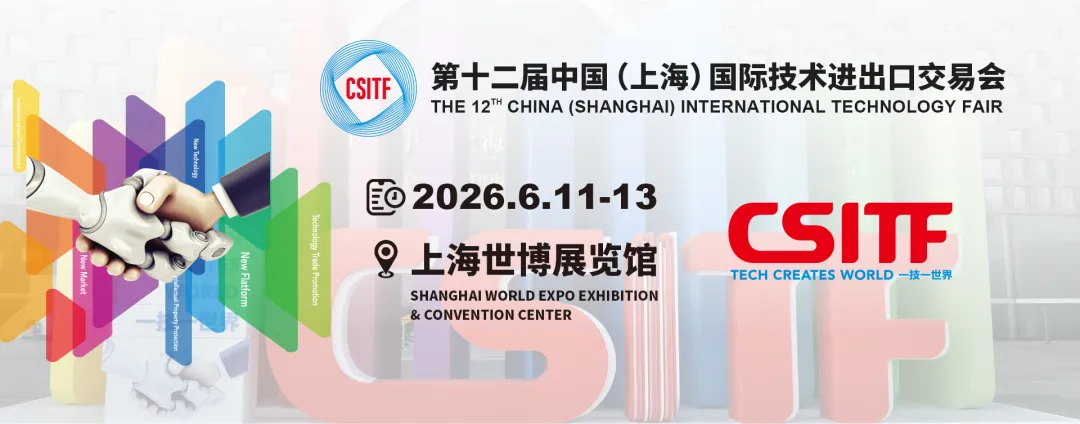
The 12th China (Shanghai) International Technology Fair (CSITF) will be held at the Shanghai World Expo Exhibition & Convention Center from June 11 to 13. Under the theme “Fostering a New Ecosystem for Technology Trade, Charting a New Chapter in Global Cooperation”, this year’s fair will feature one thematic exhibition area, four specialized technology exhibition zones, and one innovation and trade services area, covering a total exhibition space of 38,000 square meters. The event will showcase innovation achievements from 22 countries and regions around the world and 24 provinces, autonomous regions and municipalities across China. There are 1,006 participating companies, exceeding 1,000 for the first time. During the fair, organizers will host an opening ceremony, three themed days dedicated to the Guest City of Honor, international organizations and intellectual property, as well as more than 40 themed promotional events.
Source: Shanghai Release
2.“Realm of the World Tree” — Plants of the American Show to Open in July
[Keywords: Plants of the American Show]

From July 9, 2026 to November 14, 2027, the “Realm of the World Tree — Agave and its friends: Plants of the American Show” will be held at the Shanghai Greenhouse Garden. The exhibition will be presented in conjunction with the Shanghai Museum’s “On the Top of the World Tree: Ancient Civilizations of the Americas” exhibition. Drawing on the three themed pavilions of the Shanghai Greenhouse Garden, it will showcase more than 300 representative plant species from the Americas and explore the rich cultural heritage of the Aztec, Maya and Inca civilizations.
Source: Shanghai Release
Competitive Events
1.Shanghai Regional Competition of the 2026 “Data Element x” Contest Kicks Off
[Keywords: “Data Element x” Contest]
Recently, the Shanghai regional competition of the 2026 “Data Element x” Contest was launched. The competition is open to a wide range of participants, including enterprises, public institutions, research institutes and universities. Joint participation by industry, academia and research organizations is encouraged. This year’s Shanghai regional competition features a “17+1+1+1” track structure, comprising 17 industry-specific tracks, one dedicated track for data infrastructure, one Shanghai-specific track focused on digital globalization, and one open innovation track. The deadline for registration is July 15.
Source: Shanghai Release
2.2026 Shanghai (Yangtze River Delta) Innovation and Entrepreneurship Competition for Young and Mid-Career Engineers Opens for Registration
[Keywords: Shanghai Innovation and Entrepreneurship Competition for Young and Mid-Career Engineers]
Recently, registration officially opened for the 2026 Shanghai (Yangtze River Delta) Innovation and Entrepreneurship Competition for Young and Mid-Career Engineers. The competition is expected to feature 11 professional tracks and two invitational tracks. Outstanding projects selected through the competition will receive comprehensive support, including investment and financing matchmaking, credit facilities and tailored financial services, as well as access to office space and talent apartments.
Source: Shanghai Municipal Human Resources and Social Security Bureau
https://rsj.sh.gov.cn/trsrc_17739/20260529/t0035_1441094.html
Training and Lectures
Registration Open for the Sixth Foreign Trade Salon: Policy Seminar on the Customs Enterprise Credit Management System and the Upgraded Functions of the Single Window AEO Service Section
[Keywords: GAC, Credit management, AEO]
To help foreign-invested enterprises gain a better understanding of the latest policies on customs credit management and make full use of the upgraded functions of the AEO service section on the Shanghai International Trade Single Window, the Shanghai Foreign Investment Association will host the Sixth Foreign Trade Salon: Policy Seminar on the Customs Enterprise Credit Management System and Upgraded Functions of the Single Window AEO Service Section on June 17. The seminar will provide professional guidance on strengthening corporate credit management, making effective use of trade facilitation measures, and improving customs clearance efficiency. Registration will close at 12:00 on June 15.
Source: Shanghai Foreign Investment Association
Culture & Art
1.2026 Shanghai International Film and TV Festival Set to Open
[Keywords: Shanghai International Film Festival (SIFF), Shanghai TV Festival]

The 28th Shanghai International Film Festival (SIFF) will be held from June 12 to 21, followed by the 31st Shanghai TV Festival from June 22 to 26.
This year’s SIFF received approximately 4,100 film submissions from 125 countries and regions, setting a new record. The festival also achieved a new milestone by receiving submissions for the first time from countries including Ghana and Mozambique. Of the entries received, around 3,000 films met the eligibility requirements for competition, with 82% being world or international premieres.
Meanwhile, the Shanghai TV Festival received more than 1,000 submissions from 60 countries and regions worldwide. The number of participating countries and regions increased by 39.5% compared with last year’s 43, with particularly strong growth in submissions from Asia and South America.
Source: International Services Shanghai
https://english.shanghai.gov.cn/en-28thSIFF&31thShanghaiTVFestival/20260519/89005d8e7d3844eb8e53078e8fac8e2b.html
2.2026 MISA Performance Schedule Released
[Keywords: Music in the Summer Air]

The 2026 Music in the Summer Air (MISA) festival will be held from July 5 to 20 in Shanghai. This year’s festival will feature 33 live performances and more than 20 online livestreams. In addition to its rich musical offerings, MISA will present a diverse range of cross-disciplinary collaborations incorporating theatre, film, jazz, Silk Road folk music and dance. The festival will also host a number of internationally renowned artists making their Asian debut performances.
Source: Shanghai Symphony Orchestra
3.The Month of Shanghai Style Qipao Art Exhibition Opens
[Keywords: Qipao]

June 13 marks China’s Cultural and Natural Heritage Day, which this year carries the theme “Intangible Cultural Heritage: Making Life Better”. As one of Shanghai’s flagship events for this year’s Cultural and Natural Heritage Day celebrations, the “Charm of Shanghai 6·6: The Month of Shanghai Style Qipao” has officially kicked off. Its opening event, the “Charm of Shanghai 6·6: The Month of Shanghai Style Qipao Art Exhibition”, opened at the Shanghai Mass Art Center on June 6 and will run for one month.
Source: Shanghai Tourism