Shanghai Weekly Bulletin (Issue 151 No.3, July 2026) ( 2026.07.21 )
Laws and Regulations
National
1.State Council Approves 15th Five-Year Plan for Expanding Consumption
[Keywords: Consumption expansion]
The State Council recently approved in principle the 15th Five-Year Plan for Expanding Consumption. The document sets out 28 key tasks and measures across six areas, including improving the quality of service consumption for the benefit of the public, expanding and upgrading goods consumption, and fostering new forms, models and scenarios of consumption. At the same time, it sets up special sections on nine themes, including the silver economy and the supply of childcare products and services, and proposes specific implementation measures for the relevant fields.
Source: Website of the Chinese Government
2.STA Optimizes Departure Tax Refund Services and Promotes Standardized Policy Implementation
[Keywords: Tax refund upon departure]
On July 13, the State Taxation Administration (“STA”) issued the Notice on Optimizing Departure Tax Refund Services and Promoting Standardized Policy Implementation. It sets out five work requirements, including implementing paperless processing for tax refund upon departure and simplifying procedures, as well as optimizing the processing procedures for “refund upon purchase” and facilitating mutual recognition of services across different regions. The document aims to further facilitate departure tax refund services for overseas visitors and standardize business processing.
Source: STA
3.Four Authorities Issue Guidelines to Promote High-Quality Development of Internet Infrastructure Resources
[Keywords: Internet, Infrastructure resources]
Recently, the Ministry of Industry and Information Technology and three other authorities jointly issued the Guidelines on Promoting the High-Quality Development of Internet Infrastructure Resources. The document sets out 16 tasks across six areas and proposes that systematic breakthroughs will be achieved in the high-quality development of internet infrastructure resources by 2030, with a number of landmark original technological achievements and a series of leading technical standards.
Source: MIIT WeChat Official Account
Shanghai
Shanghai Launches Pilot Measures to Facilitate the Import of Production Materials for Medical Devices
[Keywords: Imported medical devices, Production materials]
On July 13, the Shanghai Customs and the Shanghai Municipal Science and Technology Commission issued the Announcement on Launching a Pilot Program of Facilitation Measures for the Import of Production Materials for Medical Devices. The document provides that when pilot products are imported, customs will review whether the declaration information submitted by pilot enterprises is consistent with the information in the “enterprise + product” whitelist, and on-site inspection will no longer be carried out in principle.
Source: Shanghai Science and Technology
Q&A
A spokesperson for the People’s Bank of China (“PBC”) answers questions from the press at a State Council Information Office (“SCIO”) press conference on the implementation of monetary policy and financial statistics in the first half of 2026.
Q
Mr Pan Gongsheng, Governor of the PBC, stated at the Lujiazui Forum that China would improve the short-term interest rate regulation mechanism and promote the transition of the monetary policy framework towards a price-based approach. What considerations does the PBC have regarding the exploration and optimization of the interest rate regulation mechanism?
A
At this year’s Lujiazui Forum, Governor Pan announced two specific measures to improve the short-term interest rate regulation mechanism. As this issue has recently attracted considerable attention, I would like to take this opportunity to provide a brief introduction.
The first measure is to improve the mechanism for using temporary repo and reverse repo operations. These operations establish an interest rate corridor. When short-term market rates persistently move beyond the corridor, the PBC will promptly conduct necessary liquidity operations to effectively reduce fluctuations in market interest rates. Three main improvements have been introduced. First, the operation rates have been adjusted. Previously, the rates for temporary repo and reverse repo operations were set at 20 basis points below and 50 basis points above the policy rate, respectively, forming a corridor 70 basis points wide. This has now been optimized into a symmetrical corridor of 25 basis points above and below the policy rate, narrowing its width to 50 basis points. This reflects both the increasingly stable performance of short-term money market rates and the PBC’s more precise regulation of short-term interest rates. Second, the trigger conditions have been further clarified. When DR001 persistently moves beyond the temporary repo operation rates, the PBC will initiate corresponding operations to guide DR001 back within the corridor. Third, the operation window has been brought forward. Temporary repo and reverse repo operations will now be conducted from 3:00 pm to 3:30 pm, one hour earlier than before. This adjustment mainly responds to the needs of primary dealers, gives financial institutions more time to respond, and better aligns with the market practice of concentrating repo transactions before 3:30 pm.
The second measure is to add overnight reverse repo operations to the regular open market operations. In recent years, overnight transactions have accounted for nearly 90% of money market repo trading. Overnight financing has become an important means for financial institutions to manage liquidity, and market demand is substantial, particularly at times of significant short-term fluctuations in demand, such as at the end of a month. To further improve the interest rate regulation mechanism and diversify the maturities of its policy tools, the PBC introduced overnight reverse repo operations to better meet financial institutions’ short-term liquidity needs. The first such operations were conducted at the end of June, with RMB 300 billion and RMB 600 billion provided on June 29 and June 30, respectively. At certain special points in time, overnight reverse repo operations can help smooth short-term liquidity fluctuations. Some institutions may require liquidity for only two or three days. If the PBC conducts only seven-day reverse repo operations, part of the liquidity may remain in the market for longer than necessary. In such circumstances, overnight reverse repo operations can improve the efficiency of liquidity management and reduce financial institutions’ costs. At present, the focus of overnight reverse repo operations is not their interest rate, but their capacity to regulate ultra-short-term liquidity. The interest rate on seven-day reverse repo operations remains the main policy rate and, in practice, has effectively served as an anchor for market pricing.
These two measures help enhance the precision and effectiveness of the PBC’s liquidity management and regulation of short-term interest rates. Since their implementation, short-term interest rates have remained stable. DR001, the overnight interest rate, stood at 1.36% at the end of June, showing relatively limited volatility compared with quarter-end levels in recent years.
I would also like to clarify that the volume of open market operations can vary considerably and that operations cover a range of maturities. This is mainly because the factors affecting the supply of and demand for banking system liquidity are relatively complex. Fiscal receipts and expenditure, reserve requirement payments and currency issuance can all have a significant impact. The PBC will take these changing factors into consideration and make appropriate arrangements regarding the types and volumes of open market operations. It may withdraw liquidity at times and inject liquidity at others. The ultimate objective is to maintain aggregate liquidity at an appropriate level, thereby promoting the stable operation of short-term interest rates around the policy rate. The volume of any individual operation is determined by the need to regulate aggregate liquidity. It is therefore inappropriate to assess the PBC’s policy stance based on the size of a single operation. Compared with the PBC’s volume operations, the level of short-term market interest rates is a more appropriate indicator to observe.
Going forward, the PBC will continue to steadily and orderly advance the reform and improvement of its monetary policy operational framework, and better guide overnight market interest rates to remain stable around the policy rate. Taking into account the needs of primary dealers, the PBC will study the gradual increase in the frequency of overnight reverse repo operations and maintain effective communication with the market.
Source: SCIO
http://www.scio.gov.cn/live/2026/38962/tw/
Expert Perspective
Trends in International Investment Arbitration and Potential Interaction Between Chinese Arbitration and International Investment Arbitration
By Shanghai International Economic and Trade Arbitration Commission (the Shanghai International Arbitration Center)
[Continued from last issue]
[Article Summary]
Against the backdrop of ongoing reform of the global international investment governance system, the limitations of traditional bilateral investment treaties (BITs) in relation to investor obligations, the protection of public interests and dispute resolution mechanisms have attracted increasing attention. As an important legal instrument connecting investors and host states, investment contracts can specify the rights and obligations of both parties in relation to particular investment projects, thereby supplementing treaty mechanisms, strengthening investor responsibilities and promoting sustainable development. By incorporating corporate social responsibility, environmental protection, labor standards and the host state’s development objectives into investment contracts, a more balanced institutional arrangement can be established between investment protection and the public interest. At the same time, arbitration clauses in investment contracts can provide a flexible avenue for resolving investment disputes and serve as an alternative or supplementary mechanism where treaty authorization is insufficient or obstacles arise in the application of treaty provisions.
Article Details
I. Evolution of Trends in International Investment Arbitration
(I) Evolution and Latest Developments of China’s BITs
2. The Supplementary Value of Investment Contracts: Incorporating Sustainable Development Obligations and Strengthening the Dispute Resolution Framework
Against this background, investment contracts may offer a more practical solution. Unlike investment treaties, which set out state obligations in general and abstract terms, investment contracts can define the rights and obligations of both parties in detail for a specific investment project, thereby providing a clearer legal basis and more definite performance standards in the event of a dispute. More importantly, investment contracts can impose obligations on investors, thus responding to criticism of the “one-sided” nature of treaty mechanisms. They can also provide an institutional avenue for states to bring contractual claims where investors breach their obligations, which is generally difficult to achieve within the BIT framework.
At the same time, investment contracts are better suited to incorporating sustainable development obligations, such as requiring investors to fulfill corporate social responsibility in the host state and take account of the host state’s sustainable development goals, thereby establishing more robust arrangements concerning the distribution of investment returns, the protection of public interests and social acceptance. By comparison, the China-EU Comprehensive Agreement on Investment, concluded between China and the European Union in 2020, contains an extensive chapter on investment and sustainable development, covering commitments relating to labor and environmental protection. This indicates that new-generation investment treaties are seeking to incorporate public interest considerations into their institutional frameworks.
In addition, the International Institute for the Unification of Private Law (“UNIDROIT”) and the International Chamber of Commerce (“ICC”) are jointly advancing the development of the UNIDROIT–ICC Principles on Investment Contracts, which are intended to incorporate public interest considerations more systematically at the level of investment contracts. This development suggests that investment contracts and their arbitration clauses may in future form a closer complementary relationship with treaty mechanisms, while broadening the institutional framework for resolving investment disputes in practice. It is therefore a development that merits continued attention from China’s arbitration community.
3.Article 94 of the Arbitration Law of the People’s Republic of China (2025 Revision) (the “new Arbitration Law”) and Opportunities for Arbitral Institutions: The Dual Preconditions of Treaty Choice and Rule Availability
With regard to the new Arbitration Law, particular attention should be paid to Article 94, which provides that “arbitral institutions and arbitral tribunals may, in accordance with the provisions of relevant international investment treaties or agreements concerning the submission of investment disputes to arbitration, administer international investment arbitration cases under the arbitration rules agreed upon by the parties to the dispute.” This provision creates new institutional opportunities for arbitral institutions based in China. It means that Chinese arbitral institutions should develop specialized investment arbitration rules. At the same time, when China negotiates new BITs, attention should also be paid to ensuring sufficient choice in dispute resolution provisions, so that states or investors may commence arbitration not only under the ICSID or UNCITRAL Rules, but also under the rules of relevant Chinese institutions, including the Shanghai International Arbitration Center.
In the field of foreign direct investment, arbitration clauses in investment contracts may serve a supplementary “fallback” function. Where the treaty-based route encounters obstacles concerning temporal application, the nature of the dispute or the scope of textual authorization, contractual arbitration may become the practical forum for resolving the dispute. In recent discussions on the ISDS reform, the international community has often focused on the insufficient protection afforded by treaties to the public interests of host states. Both new-generation treaties and emerging contractual practices are seeking to address this concern. Advancing institutional innovation at the level of investment contracts in parallel with treaty modernization would help establish a more balanced framework of protection.
[To be continued]
One Week in Shanghai
Latest News
1.Xi Jinping Attends the Opening Ceremony of the 2026 World Artificial Intelligence Conference (WAIC) & High-Level Meeting on Global AI Governance and Delivers a Keynote Address
[Keywords: 2026 WAIC, High-Level Meeting on Global AI Governance]
On the morning of July 17, Chinese President Xi Jinping attended the opening ceremony of the 2026 World Artificial Intelligence Conference (WAIC) & High-Level Meeting on Global AI Governance at the Grand Halls in Shanghai and delivered a keynote address titled “AI Partnership for a Brighter Future”. The conference issued the Chair’s Statement of the 2026 World Artificial Intelligence Conference & High-Level Meeting on Global AI Governance.
Source: Xinhua
2.Shanghai’s GDP Grows 5.6% Year-on-Year in the First Half of 2026
[Keyword: GDP]
The Shanghai Municipal Bureau of Statistics recently released a report on Shanghai’s economic performance in the first half of 2026. According to the unified accounting results for regional GDP, Shanghai’s GDP reached RMB 2.788663 trillion in the first half of the year, up 5.6% year-on-year at constant prices. By sector, the added value of the primary industry stood at RMB 3.576 billion, up 0.9% year-on-year. The added value of the secondary industry reached RMB 569.666 billion, up 4.7%, while that of the tertiary industry totaled RMB 2.215421 trillion, up 5.9%.
Source: Shanghai Release
3.Shanghai Rises to Second Place Globally in the International Shipping Center Development Index
[Keywords: International Shipping Center Development Index]
Recently, Xinhua News Agency and the Baltic Exchange jointly released the 13th edition of the Xinhua-Baltic International Shipping Center Development Index (ISCDI). The ISCDI assesses the competitiveness of 43 shipping cities worldwide across three dimensions: port conditions, shipping services and the overall environment. The data show that since the ISCDI was launched in 2014, Shanghai has steadily risen in the rankings, secured recognition from the International Maritime Organization (IMO) as a world-class shipping center, and become an authoritative benchmark for observing the development of China’s shipping industry. This year, Shanghai rose to second place globally.
Source: International Services Shanghai
https://english.shanghai.gov.cn/en-Latest-WhatsNew/20260713/0b9ac90410b14852a4d30de35ab92699.html
4.Putuo Establishes Shanghai’s First Integrated Service and Management Platform for Trusted Bulk Commodity Trade, with More Than 100 Enterprises Joining the Blockchain
[Keywords: Bulk commodity, Trusted trade]
Leveraging the underlying shipping and trade blockchain infrastructure, Putuo District has established Shanghai’s first integrated service and management platform for trusted bulk commodity trade. As of July 9, more than 170 enterprises in Putuo District had signed data authorization agreements with the platform. A total of 122 enterprises had become members of the “Cangdeng Chain (NCWR China)” system, which has transmitted more than 1.2 million data entries to the platform. The platform has provided relevant government departments with 1.14 million valid records on the business operations of nearly 90 enterprises. Several trading platforms, warehousing companies, banks and financial institutions had also completed preliminary preparations for system integration.
Source: International Services Shanghai
https://english.shanghai.gov.cn/en-Latest-WhatsNew/20260715/690a1a74e3014b0088d3d41ccadd5ead.html
Corporate Activities
1.Amazon Global Warehousing and Distribution (GWD) Hub Launched in Lingang
[Keyword: Amazon]
Amazon Global Logistics recently launched its GWD Hub in Lingang, Shanghai. The first phase offers nearly 20,000 square meters of warehouse space and is equipped with a fully automated storage and retrieval system (ASRS). It enables automated operations throughout the entire process of goods receiving, sorting and allocation, and significantly improves warehousing throughput and turnover efficiency. The project will have a total warehouse area of up to 160,000 square meters upon full completion, further expanding its capacity for large-scale cargo consolidation, distribution and bonded storage.
Source: Shanghai Lingang
2.Siemens High Voltage Switchgear Ltd Shanghai’s New Factory Begins Operations
[Keyword: Siemens]
A new facility of Siemens High Voltage Switchgear Ltd Shanghai recently began operations in the Shanghai Minhang Economic and Technological Development Zone. Covering an area of approximately 45 mu, the new facility was built with a focus on digitalization, intelligent manufacturing and green development. It has introduced automated production lines, intelligent warehousing and logistics systems, and a digital management system covering the entire production process. The company is also exploring the application of artificial intelligence in production and quality management to continuously improve production efficiency and product quality.
Source: Siemens Energy
3.Reckitt Shanghai Science & Innovation Center Opens in Minhang
[Keyword: Reckitt]
Global consumer goods company Reckitt recently announced the official opening of its Shanghai Science & Innovation Center at Caohejing Hi-Tech Park. With a total investment of more than RMB 300 million, the center is one of nine Science & Innovation Centers across its global network and represents Reckitt’s largest R&D investment in Asia to date. Going forward, the center will continue to develop products and solutions that meet the needs of Chinese consumers and bring more R&D achievements originating in China to global markets.
Source: Minhang Commerce
4.TRICO Project Officially Landed in Lingang Blue Bay
[Keyword: TRICO]
Recently, the signing ceremony for the TRICO project was successfully held in Lingang Blue Bay. This marks the official establishment of TRICO’s first production base in China. The project will build a modern intelligent production base to high standards. It will engage in the R&D, production, and innovation of high-end decorative veneers and sustainable surface materials, with core strengths in natural wood veneers, premium dyed veneers, and eco-friendly water-based coating technologies.
Source: Shanghai Lingang
Forums and Exhibitions
International Advanced Air Mobility Expo 2026 Set to Open
[Keywords: International Advanced Air Mobility Expo]
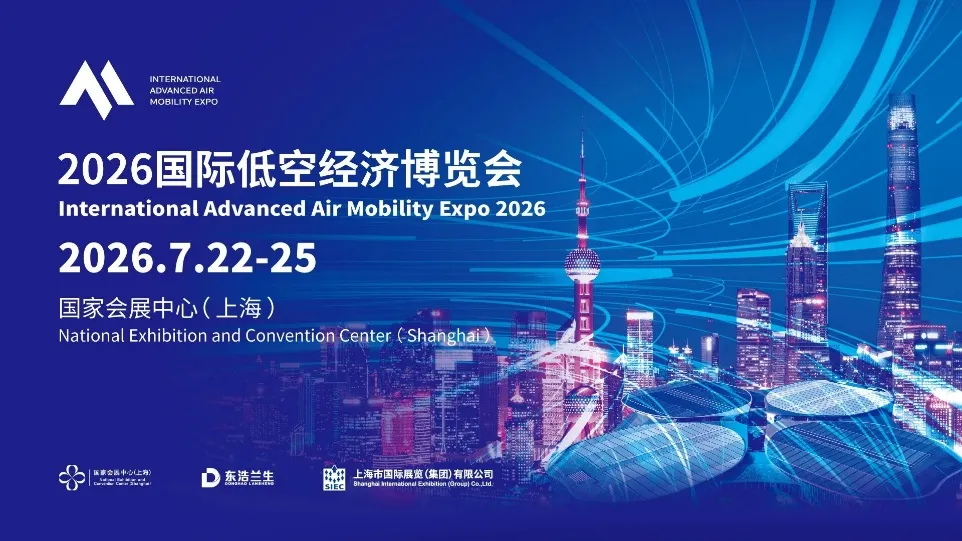
The International Advanced Air Mobility Expo 2026 will take place from July 22 to 25 at the National Exhibition and Convention Center (Shanghai). Under the theme “Harnessing Low-Altitude Potential, Charting a New Chapter for Economic Development”, the expo will cover a total exhibition area of 60,000 square meters and bring together more than 400 exhibitors from China and abroad. More than 80 high-level forums and a variety of public interactive activities will be held concurrently, creating a key industry exchange platform integrating technology showcases, ecosystem connections and public science education.
Source: International Advanced Air Mobility Expo
Competition Events
WeChat Submission Channel Opens for 11th Shanghai Citizens Art Exhibition Themed “Vision of Splendor”
[Keyword: Shanghai Citizens Art Exhibition]
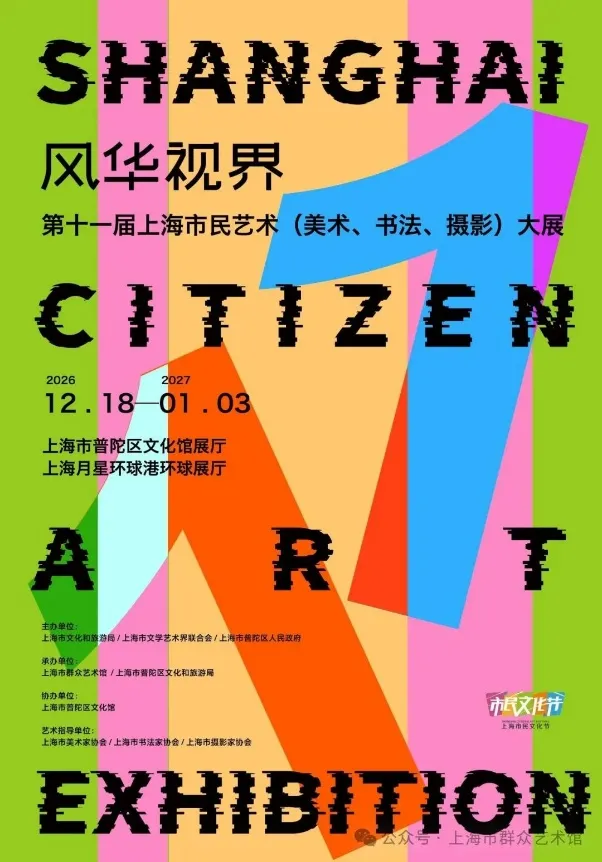
The 11th Shanghai Citizens Art Exhibition, jointly organized by the Shanghai Municipal Administration of Culture and Tourism and two other institutions, recently began inviting submissions from artists, calligraphers and photographers across the city. The works should be created around the theme of “Vision of Splendor” and incorporate major events and activities in 2026. Guided by the people-centered city philosophy, the works should reflect the themes of the times and Shanghai’s practices, showcase the city’s high-quality development and the spirit of its residents.
Source: Shanghai Mass Art Center
Culture & Art
1.“The Never-Fading Khara Khoto” Immersive Khara Khoto Experience Exhibition Opens
[Keywords: Western Xia Dynasty, Khara Khoto]
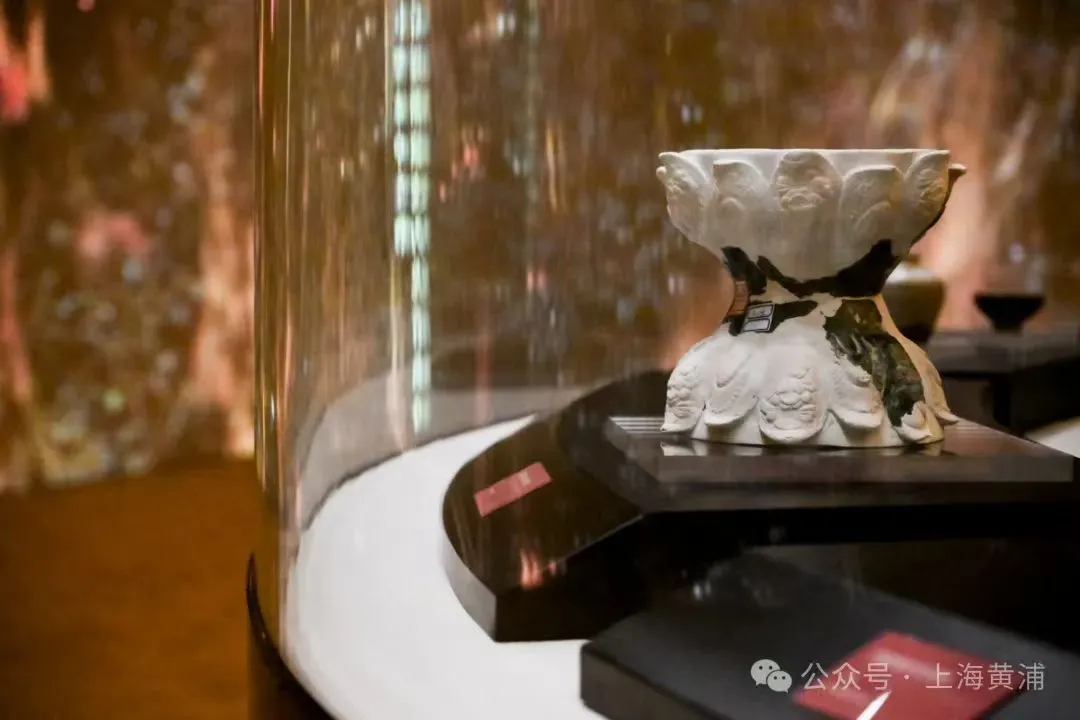
Recently, “The Never-Fading Khara Khoto” Immersive Khara Khoto Experience Exhibition opened at ALIGHT ROOM in Lafayette Culture Center. As the world’s first immersive cultural heritage exhibition to present a panoramic and systematic account of the civilization of the Khara Khoto ruins, it officially opened to the public on July 18 and will run through October 7. Featuring more than 100 unearthed treasures from the Western Xia and Yuan dynasties, the exhibition combines leading academic expertise, major archaeological finds and cutting-edge digital immersive technologies to vividly present the integration and continuity of China’s diverse yet unified civilization.
Source: Shanghai Huangpu
2.“Lina Bo Bardi: The Poetics of Survival” Exhibition to Open on July 25
[Keywords: Lina Bo Bardi]

The exhibition “Lina Bo Bardi: The Poetics of Survival” will open at the Power Station of Art on July 25. Born in Italy and based in Brazil, architect Lina Bo Bardi is a legendary Latin American figure who holds an essential place in the history of modernist architecture. Her first major solo exhibition in China will bring together precious models, historical manuscripts, rare photographs and iconic furniture designs at the PSA, spanning the fields of architecture, design and art.
Source: Power Station of Art
3.“Blanc de Chine” Themed Temporary Exhibition Opens to the Public
[Keywords: Blanc de Chine]

The “Blanc de Chine” themed temporary exhibition opened to the public free of charge on July 16. Structured around “Blanc de Chine” as its narrative thread, the exhibition comprises five sections. Jointly organized by the WorldSkills Museum and the Dehua County government over the course of one year, it features more than 100 selected art treasures created by Chinese arts and crafts masters, national technical experts and others.
Source: Shanghai Human Resources and Social Security