Shanghai Weekly Bulletin (Issue 153 No.1, August 2026) ( 2026.08.05 )
Laws and Regulations
National
1. State Council Issues Regulations on Exit and Entry Administration
[Keywords: Exit and entry]
The Regulations of the State Council on Exit and Entry Administration was promulgated on July 31 and will take effect on September 15, 2026. The document aims to standardize exit and entry administration, protect the lawful rights and interests of people entering and leaving the country, and safeguard national sovereignty, security, and development interests.
Source: Xinhua News Agency
https://h.xinhuaxmt.com/vh512/share/13222612?docid=13222612&newstype=1001&time=1785490570432
2. China and Uzbekistan Launch AEO Mutual Recognition Arrangement on August 1
[Keywords: Uzbekistan, AEO]
China’s General Administration of Customs recently issued an announcement on the implementation of the Authorized Economic Operator (AEO) mutual recognition arrangement between China and Uzbekistan. Starting on August 1, 2026, China Customs and Uzbekistan Customs mutually recognize each other’s AEOs.
Source: Customs Release
3. Simplified Measures for Personal Information Protection by Small Personal Information Handlers Issued
[Keywords: Personal information, Protection]
Recently, the Cyberspace Administration of China (CAC) and the Ministry of Public Security jointly issued the Provisions on Simplified Measures for Personal Information Protection by Small Personal Information Handlers. The document supports small personal information handlers in adopting simplified measures commensurate with their scale and capabilities to ensure personal information security and protect personal information rights and interests, while complying with relevant laws, administrative regulations, and national rules on personal information protection. The document will take effect on September 1, 2026.
Source: CAC
4. Revised Measures for Prioritized Patent Examination Issued
[Keywords: Patent, Prioritized examination]
Recently, the China National Intellectual Property Administration (CNIPA) issued the revised Measures for the Administration of Prioritized Patent Examination. The revisions focus on three main areas: adjusting eligibility requirements in light of new developments to better serve national needs; strengthening whole-process management with a greater emphasis on quality; and optimizing procedures and standards to improve user experience. The document will take effect on September 1, 2026.
Source: CNIPA
5. Draft Revision to Measures for Supervision and Administration of Online Medical Device Sales Open for Public Comment
[Keywords: Medical devices, Online sales]
On July 27, the National Medical Products Administration published a notice on its website soliciting public comments on the Measures for the Supervision and Administration of Online Medical Device Sales (Draft Revision for Comment). The document proposes that medical device e-commerce platform operators establish real-name registration records for medical device online sellers applying to join their platforms and verify and update the records at least once every six months. Comments may be submitted through August 26, 2026.
Source: NMPA
https://www.nmpa.gov.cn/xxgk/zhqyj/zhqyjylqx/20260727172136110.html
Shanghai
1. Shanghai Regulations on Surveying, Mapping and Geographic Information to Take Effect on October 1
[Keywords: Surveying and mapping, Geographic information]
On July 29, the 32nd session of the Standing Committee of the 16th Shanghai Municipal People’s Congress voted to adopt the Shanghai Regulations on Surveying, Mapping and Geographic Information, which will take effect on October 1, 2026. The document mainly focuses on improving the institutional framework and coordinating the development of surveying and mapping, as well as clarifying basic requirements and strengthening the foundations of related work.
Source: Shanghai Municipal People’s Congress
2. Shanghai Issues Action Plan to Build One to Two World-Class Sports Event Brands
[Keywords: Sports event economy]
The General Office of the Shanghai Municipal People’s Government recently issued the Action Plan for Promoting the High-Quality Development of Shanghai’s Sports Event Economy (2026–2028). The document sets out key targets, including improving the quality of sports event offerings and building one to two world-class Shanghai sports event brands. It also aims to further enhance the overall benefits of sports events, with cumulative attendance at national-level and higher-level events exceeding 10 million and their economic contribution exceeding RMB 100 billion, while cumulative participation in mass sports events is expected to exceed 30 million.
Source: Shanghai Municipal People’s Government
https://www.shanghai.gov.cn/nw12344/20260730/b6e7b14fb36e4142a202ad741249334b.html
3. Shanghai Issues Guidelines on Accelerating Industrial Intelligent Agent Development Through the Information and Communications Industry
[Keywords: Communications industry, Industry]
The Shanghai Communications Administration recently formulated and issued the Guidelines on Accelerating the Empowerment of Industrial Intelligent Agent Development by Shanghai’s Information and Communications Industry to Support New Industrialization. The document sets out three key tasks and aims to establish, by the end of the 15th Five-Year Plan period, a development landscape featuring strong network support, ample computing power, smooth data flows, diverse model applications, and reliable security safeguards.
Source: Shanghai Communications
4. Full Text of Judicial Opinion on Shanghai Free Trade Zone Offshore Bond Test Case Released
[Keywords: Free trade zone offshore bonds]
The Shanghai Financial Court recently released the full text of the Judicial Opinion of the Shanghai Financial Court under the Financial Market Case Testing Mechanism. The document consists of sections on the composition of the adjudication panel, a summary of the judicial opinion, and the main text. The main text comprises five parts: case overview, basic facts, parties’ arguments, the adjudication panel’s opinion, and the adjudication panel’s final conclusion.
Source: Shanghai Financial Court
Q&A
An Official from the CAC answers press questions on the Provisions on Simplified Measures for Personal Information Protection by Small Personal Information Handlers.
Q1
What are the main contents of the Provisions?
A1
The document mainly addresses the following matters:
First, the document specifies simplified measures for personal information processing rules, including formulating and disclosing personal information processing rules, fulfilling their obligation to inform, obtaining individual consent, handling applications from individuals to exercise their rights, and deleting personal information.
Second, the document specifies simplified measures for small personal information handlers to fulfill their personal information protection obligations. These include simplified measures for conducting personal information protection compliance audits and personal information protection impact assessments, establishing personal information protection management systems, and fulfilling remedial and notification obligations in the event of personal information security incidents.
Third, the document clarifies supervision and administration requirements. These include specifying circumstances in which small personal information handlers may be exempt from penalties or receive lighter or mitigated penalties, encouraging departments responsible for personal information protection to reduce compliance costs for small personal information handlers, and setting out legal liabilities for violations of the provisions. The document also includes, as annexes, the Self-Assessment Checklist for Personal Information Protection Compliance Audits by Small Personal Information Handlers and the Personal Information Protection Impact Assessment Form for Small Personal Information Handlers, facilitating self-conducted compliance audits and personal information protection impact assessments by small personal information handlers.
Q2
What simplified measures does the Provisions introduce for small personal information handlers in formulating and publishing personal information processing rules?
A2
The document specifies the contents that should be included in the personal information processing rules of small personal information handlers and provides simplified methods for publishing such rules both offline and online. Pursuant to the document, the personal information processing rules of small personal information handlers should include at least the following: (1) the name of the small personal information handler; (2) the department or personnel responsible for handling individuals’ requests to exercise their rights, and the relevant contact information; and (3) the purposes and methods of personal information processing, the categories of personal information processed, retention periods, and other relevant information.
Where a small personal information handler collects personal information offline, it may publish its personal information processing rules through convenient means such as posting a notice in a prominent location at its place of business. Where personal information is collected online, the rules may be published through service agreements, pop-up notices in product or service applications, website announcements, or other means.
The document specifies that service and management entities such as industrial parks, industrial bases, and commercial property operators are encouraged to formulate unified personal information processing rules for small personal information handlers conducting the same offline business activities within the scope of their services and management, and to publish such rules in a prominent location. Small personal information handlers that agree to comply with the unified personal information processing rules and are identified in those rules are not required to formulate separate personal information processing rules.
Source: CAC
Expert Perspective
Trends in International Investment Arbitration and Potential Interaction Between Chinese Arbitration and International Investment Arbitration
By Shanghai International Economic and Trade Arbitration Commission (the Shanghai International Arbitration Center)
[Continued from last issue]
[Article Summary]
This section analyzes the development path of Chinese arbitration institutions’ participation in investment arbitration. It notes that, as the new Arbitration Law provides an institutional basis for Chinese arbitration institutions to administer international investment arbitration cases, investment arbitration in China is moving from an exploratory stage toward institutionalized development. The section examines the issue from three dimensions: legal authorization, institutional capacity, and practical pathways. It argues that, drawing on their long-standing experience in administering foreign-related cases, their well-developed digital platforms, and their international pools of experts, Chinese arbitration institutions already possess the foundation for handling investment disputes. At the same time, they can gradually build an investment arbitration system with Chinese characteristics by strengthening front-end governance of investment contract disputes, exploring the scope for application of Article 94 of the new Arbitration Law, and improving investment arbitration rules and procedural mechanisms. Looking ahead, Chinese arbitration institutions will need to actively participate in the reform of international investment arbitration rules and strengthen exchanges with the international arbitration community. Through institutional innovation and the accumulation of practical experience, they can further enhance their international competitiveness and provide more diverse and efficient dispute resolution mechanisms, thereby supporting Chinese enterprises in “going global” and contributing to improvements in the international investment environment.
【Article Details】
II. Potential Interaction Between Chinese Arbitration and International Investment Arbitration
(III) Advancing Investment Arbitration by Chinese Arbitration Institutions: Institutional Opening, Capacity Advantages, and Practical Challenges
1. Dual Progress in Law and Practice: From Exploration to Institutionalized Authorization
The new Arbitration Law took effect on March 1, 2026, allowing Chinese arbitration institutions to administer international investment arbitration cases. Even before the law was enacted, however, Chinese institutions had already begun exploring relevant institutional pathways. For example, the Shanghai International Arbitration Center (SHIAC) revised its arbitration rules in 2024 with a view to administering investment arbitration cases, subject to the parties’ consent, within the framework of applicable treaties, regulations, and laws.
This exploration has been driven by Chinese enterprises’ growing demand for high-quality dispute resolution mechanisms in the context of globalization. It also forms part of China’s rule-of-law development and is aimed at enhancing the capacity of China’s legal community (including the arbitration community) to provide international dispute resolution services, while incorporating Chinese cultural experience into institutional arrangements.
2. Sources of Institutional Confidence: Case Management, Digital Tools, and Expert Resources
Chinese arbitration institutions’ confidence stems primarily from their case management capabilities, digital tools, and expert resources. Taking the SHIAC as an example, its secretariat has a sizable team of experienced practitioners and advanced digital platforms. The number of foreign-related cases handled by the SHIAC is constantly increasing, including investment-related disputes involving the Belt and Road regions such as Southeast Asia and the Middle East. The extensive case-management experience and digital capabilities give the arbitration institutions advantages in procedural administration, timeline management, and services to the parties. At the same time, Chinese arbitration institutions combine an international outlook with local advantages. On the one hand, the Chinese tradition of integrating mediation with arbitration can provide flexible tools for resolving investment disputes. On the other hand, these institutions are also incorporating innovations from international practice. The new Arbitration Law allows institutions to apply different arbitration rules in foreign-related cases and adopt other relevant arrangements. In addition, Chinese arbitration institutions have access to a global pool of multidisciplinary experts. This provides the human resources and professional expertise needed to handle investment disputes in the future.
3. Practical Pathways: Front-End Governance of Contractual Disputes, Scope for Statutory Interpretation, and Rule-Making Capacity
At the institutional level, three practical pathways can be identified.
First, Chinese arbitration institutions can serve as the “first line of defense” by addressing investment disputes at the contractual stage. Many investment disputes arise not initially from sovereign acts, but from commercial disputes at the contractual level, such as restrictions imposed under franchise arrangements and joint venture contract disputes, which may ultimately escalate into Investor-State Dispute Settlement (ISDS) proceedings. Through the effective use of host-state remedies and institutional arbitration, disputes may be resolved at an earlier stage before escalating into treaty disputes. Over the past decade, the SHIAC has handled numerous foreign-related investment disputes related to investment contracts, involving multiple countries and regions. At the same time, it has explored whether disputes involving a government or state as a party to a contract are arbitrable under the new Arbitration Law, and whether arbitration clauses in such contracts should remain valid even if the contracts are characterized as “administrative agreements”.
Second, efforts may be made to explore the scope for interpretation and application of Article 94 of the new Arbitration Law. Article 94 currently focuses on investment arbitration under “treaties or agreements”. However, a significant amount of foreign investment is made through contracts entered into with states, and disputes arise from such contracts. Where a dispute arises from a contract between a host-state government and a foreign investor, there should be no obstacle to a Chinese arbitration institution accepting the case, provided that the parties have chosen it as the dispute resolution forum.
Third, institutions should strengthen their capacity building, including the development of rules, panels, and procedural mechanisms. They should formulate investment arbitration rules and case management guidelines, establish dedicated or recommended rosters of arbitrators for investment disputes, and explore procedural designs that incorporate distinctive features of Chinese case management and mediation practice. These may include pre-arbitration mediation before the constitution of the arbitral tribunal, online technologies and electronic platforms, direct appointment of experts by arbitral tribunals, a mechanism for scrutinizing draft awards, as well as possible two-stage award procedures or post-award mechanisms under investment arbitration rules. At the same time, institutions should closely follow and participate in ISDS reform, maintain exchanges with the international community, and learn from the outcomes of such reform. This will help enhance their capacity to administer international cases concerning the investment environment, with a view to eventually being able to administer and manage investment arbitration cases.
One Week in Shanghai
Latest News
UP! SHANGHAI, the Shanghai 2026 City Image Film, Officially Released
[Keywords: Shanghai city image film]
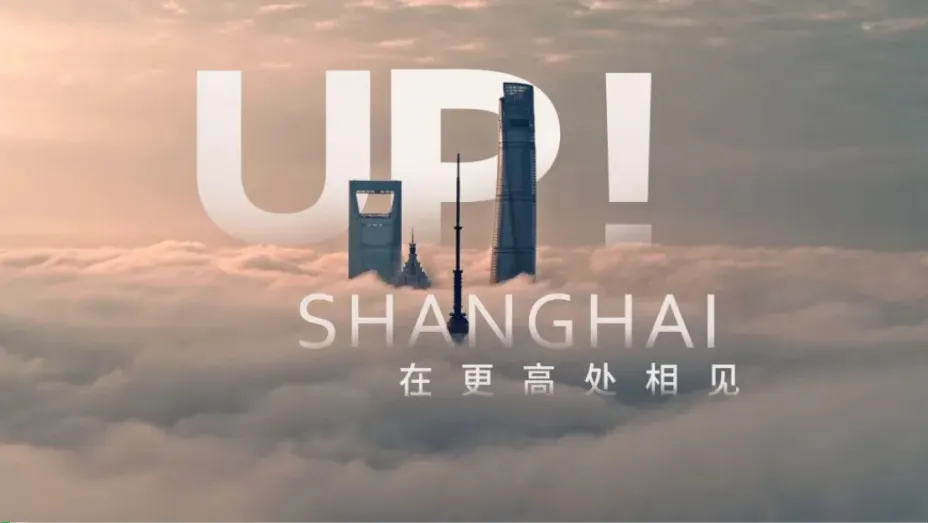
With 100 days to go before the ninth China International Import Expo, the Shanghai 2026 city image film, UP! SHANGHAI, produced by the Information Office of the Shanghai Municipal People’s Government and created by Shanghai Media Group, was officially released and is being shown across major media platforms.
Source: Shanghai Release
Corporate Activities
Casa Lavazza Flagship Store Opens on the Bund
[Keywords: Lavazza]
Asia’s only Casa Lavazza, the House of Italian Coffee Culture, recently opened at the old City Hall on the Bund, bringing an authentic Italian experience to Shanghai residents. The Casa Lavazza flagship store marks the first full introduction in China of the “Casa” concept developed from its Milan store, aiming to create an Italian-style coffee house where visitors can enjoy premium coffee and explore the culture and traditions behind it.
Source: International Services Shanghai
https://english.shanghai.gov.cn/en-FirstStores/20260729/9578f04e8774484c8632c840b8285aa2.html
Forums and Exhibitions
22 Exhibitions Set to Keep Shanghai’s Summer Buzz Going in August
[Keyword: Exhibitions]

Shanghai will remain lively and vibrant throughout August, with a series of major exhibitions, including the Shanghai Book Fair and Pet Fair Asia. Readers can enjoy a week-long celebration of books at the Shanghai Book Fair, while pet lovers can explore the entire pet industry chain at the Pet Fair Asia. A series of Intertextile Shanghai Apparel Fabrics exhibitions will bring together more than 4,600 companies to showcase the latest trends in the global textile industry, while the China International Fruit Expo will bring fresh produce from around the world to Shanghai and provide a professional platform for trade matchmaking.
Source: Shanghai Commerce
Competition Events
1. Registration Opens for 4th Shanghai FIEs Pickleball Friendship Tournament
[Keyword: Pickleball]
The Shanghai Foreign Investment Association recently opened registration for the 4th Shanghai FIEs Pickleball Friendship Tournament. The tournament will feature a team competition comprising men’s doubles, women’s doubles, and mixed doubles. A total of 32 teams will be recruited, with registration closing on August 30, 2026.
Source: Shanghai Foreign Investment Association
2. UFC Shanghai Set from August 28 to 29
[Keyword: UFC]
UFC Fight Night Shanghai and the semifinals of Season 5 of Road to UFC will be held at the SPD Bank Oriental Sports Center from August 28 to 29. The Road to UFC Season 5 semifinals will kick off on August 28, with advancing fighters competing for places in the finals and a UFC contract. The special main event that evening will feature a lightweight bout between Chinese UFC fighter Taiyilake and Flowers.
Source: International Services Shanghai
https://english.shanghai.gov.cn/en-SportsEvents/20260728/0bbce101064947cc8f37380722e3c00d.html
Training & Seminars
1. Empowered by the New Law, Safeguarded by Compliance — Registration Underway for Seminar on the 2026 Revision of the Trademark Law
[Keywords: Trademark Law]
To help foreign-invested enterprises understand the key points of the newly revised Trademark Law of the People’s Republic of China, the Shanghai Foreign Investment Association will hold a special seminar on August 12. Intellectual property experts will be invited to provide an in-depth interpretation of the key revisions to the Trademark Law based on judicial adjudication standards and frontline practical experience, with a focus on issues of concern to enterprises and practical approaches to intellectual property protection. Registration will close on August 11, 2026.
Source: Shanghai Foreign Investment Association
2. The Second “Go Global” International Youth Talent Training Camp Launched
[Keywords: “Go Global” International Youth Talent Training Camp]
Recruitment has recently opened for the second “Go Global” International Youth Talent Training Camp. Selected Chinese and international young participants will gather in Changning for eight days of practical training from August 29 to September 20, where they will explore global opportunities through real-world business scenarios. The registration deadline is August 21, 2026.
Source: Shanghai Changning
Culture & Art
1. Tickets on Sale for Shanghai Grand Opera House’s Opening Season, with Three World-Leading Opera Houses Bringing Major Productions for Asian Premieres
[Keywords: Shanghai Grand Opera House]
Ticket sales have recently opened for the first round of performances at the Shanghai Grand Opera House. La Fenice Opera House’s Tosca, the Mariinsky Theatre’s Aida, the Berlin State Opera’s Der Rosenkavalier, and Shostakovich Symphonies Cycle will be staged successively at the Shanghai Grand Opera House. All these performances are part of the Shanghai Grand Opera House’s inaugural season, titled “Born to Sing”. The three operas are all classics in the history of opera and will make their Asian premieres in newly produced versions, with Shanghai as their only stop in China.
Source: International Services Shanghai
https://english.shanghai.gov.cn/en-CulturalPerformances/20260728/11d4152ea8e54706912d28b20a34a8f3.html
2. Exhibition of Fine Jingdezhen Ceramics from the Kangxi, Yongzheng and Qianlong Reigns Opens
[Keywords: Qing Dynasty, Jingdezhen, Ceramics]
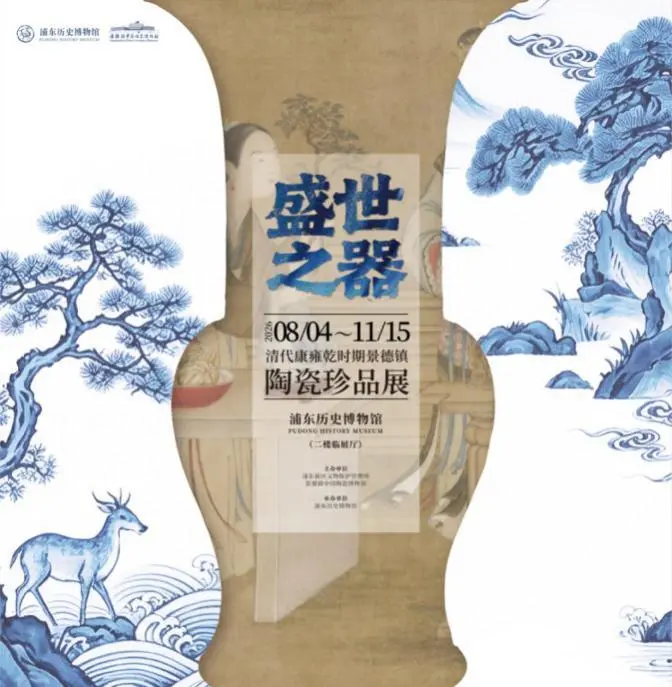
On August 4, the exhibition “Treasures of a Prosperous Era: Fine Jingdezhen Ceramics from the Kangxi, Yongzheng and Qianlong Reigns of the Qing Dynasty” officially opened to the public in the temporary exhibition hall of the Pudong History Museum. The exhibition brings together 122 pieces and sets of fine ceramics from the Kangxi, Yongzheng and Qianlong reigns in the collection of the Jingdezhen China Ceramics Museum, including 16 Grade II cultural relics and 47 Grade III cultural relics. Through a rich collection of cultural relics, detailed historical materials and systematic displays, the exhibition illustrates one of the most significant periods in the development of traditional Chinese porcelain-making.
Source: Pudong History Museum
3. Shanghai Oriental Art Center Unveils 2026/27 Autumn/Winter Season
[Keywords: Shanghai Oriental Art Center, 2026/27 Autumn/Winter Season]

On July 28, the Shanghai Oriental Art Center unveiled its 2026/27 Autumn/Winter season, bringing together renowned artists and ensembles from around the world for 68 performances across 40 productions. Marking the 270th anniversary of Mozart’s birth, the season will feature the “Mozart Plan” as its central theme across five program sections: “Symphonies at the Oriental Art Center”, “Masters Live”, “Chamber Music”, “Vocal Arias”, and “Theater from East and West”.
Source: Shanghai Oriental Art Center