Shanghai Weekly Bulletin (Issue 154 No.2, August 2026) ( 2026.08.12 )
Laws and Regulations
National
1. Revised Regulations on the Protection of Layout-Designs of Integrated Circuits Promulgated
[Keywords: Integrated circuit layout-designs]
Premier Li Qiang of the State Council recently signed a State Council decree promulgating the revised Regulations on the Protection of Layout-Designs of Integrated Circuits. The document will take effect on October 15, 2026. The revision mainly covers four areas: clarifying overall requirements, improving application and examination procedures, strengthening the protection of exclusive rights, and promoting the utilization of layout-designs.
Source: Chinese Government Website
2. State Council Issues 15th Five-Year Plan for Intellectual Property Protection and Utilization
[Keywords: Intellectual property]
The State Council recently issued the 15th Five-Year Plan for Intellectual Property Protection and Utilization. The document sets out 11 tasks in four areas and includes 13 dedicated sections covering indicative targets for intellectual property development during the 15th Five-Year Plan period, an intellectual property protection initiative for strategic emerging industries, and other priorities.
Source: Chinese Government Website
3. Supreme People’s Court Issues Provisions on the Temporal Effect of the Application of the Ecological and Environmental Code of the People’s Republic of China
[Keywords: Ecological and Environmental Code, Temporal effect]
On August 5, the Supreme People’s Court issued the Provisions of the Supreme People’s Court on the Temporal Effect of the Application of the Ecological and Environmental Code of the People’s Republic of China. The document will take effect on August 15, 2026. It clarifies that, for ecological and environmental civil cases arising from legal facts occurring before the Ecological and Environmental Code took effect, if the laws and judicial interpretations then in force contained only general provisions while the Ecological and Environmental Code contains specific provisions, the laws and judicial interpretations then in force shall apply, but the specific provisions of the Ecological and Environmental Code may be cited in the reasoning of the judgment.
Source: Supreme People’s Court
4. SAFE Issues Notice to Further Improve Foreign Exchange Administration of Domestic Foreign Exchange Loans
[Keywords: Foreign exchange loans, Foreign exchange administration]
The State Administration of Foreign Exchange (SAFE) recently issued the Notice on Matters Concerning the Further Improvement of Foreign Exchange Administration of Domestic Foreign Exchange Loans. The document will take effect on October 1, 2026. It mainly covers three areas: improving the account management system, simplifying foreign exchange settlement and purchase procedures, and strengthening ongoing and post-transaction supervision.
Source: SAFE
Shanghai
1. Shanghai Promotes Innovative Development of New Internet Exchange Center
[Keywords: New internet exchange center]
The Shanghai Communications Administration recently issued the Implementation Plan for Accelerating the Innovative Development of the National (Shanghai) New Internet Exchange Center. By 2030, the center aims to establish three to five global strategic nodes and five to eight extension nodes in neighboring domestic regions, establish peering connections with more than 20 internet exchange centers in China and abroad, and remain among the world’s top 50 internet exchange centers.
Source: Shanghai Communications Administration
https://shca.miit.gov.cn/zwgk/tzgg/art/2026/art_d3d076ac66f6443b992cc3d17d553db1.html
2. Shanghai Issues Detailed Measures to Support SMEs in Expanding into International Markets
[Keywords: SMEs, International markets]
The Shanghai Municipal Commission of Commerce and the Shanghai Municipal Finance Bureau recently issued the Detailed Implementation Measures for Shanghai’s Funding Support for SMEs to Expand into International Markets. The document took effect on the date of issuance. It stipulates that Shanghai SMEs participating in or organizing international exhibitions may receive support covering up to 70% of actual expenditures, while management system certification projects may receive support covering up to 50% of actual expenditures.
Source: Shanghai Municipal Commission of Commerce
https://sww.sh.gov.cn/zwgkgfqtzcwj/20260731/c379ccb3e2044c5db9a2a161dd5866c6.html
3. Draft Amendment to Shanghai Regulations on Convention and Exhibition Industry Open for Public Comment
[Keywords: Convention and exhibition industry]
The General Office of the Standing Committee of the Shanghai Municipal People’s Congress recently issued a notice soliciting public comments on the Draft Amendment to the Shanghai Regulations on the Convention and Exhibition Industry. The document focuses on enhancing Shanghai’s capacity as an international convention and exhibition hub, improving measures to support industry development, and strengthening services and support for participation in exhibitions outside the Chinese mainland. Comments may be submitted until August 15, 2026.
Source: Shanghai Municipal People’s Congress
Q&A
Officials from the Ministry of Justice and the China National Intellectual Property Administration Answer Questions on the Revision of the Regulations on the Protection of Layout-Designs of Integrated Circuits.
Q1
What provisions have been introduced in the document to improve application and examination procedures?
A1
First, an application for the registration of a layout-design must be based on genuine creative activity, and no falsification is permitted. Second, the document introduces a requirement for a declaration of originality and stipulates that the copy or drawing submitted must clearly indicate the original elements of the layout-design. Third, an application must be rejected if the layout-design for which registration is sought clearly fails to comply with the requirements of the document. After a layout-design has been registered, any person who finds that the registration does not comply with the requirements of the document may request its revocation. If the registration is revoked, the exclusive right in the layout-design is deemed never to have existed. Fourth, where a party loses its rights because it fails to meet a time limit prescribed by the document or specified by the intellectual property administration department under the State Council due to force majeure or another justified reason, it may request the restoration of its rights.
Q2
What provisions have been introduced in the document to promote the utilization of layout-designs?
A2
First, the document emphasizes that the intellectual property administration department under the State Council shall work with relevant departments to take measures to strengthen public services and promote the utilization of layout-designs. Second, where a legal person or an unincorporated organization organizes the creation of a layout-design, it shall provide reasonable rewards and remuneration to eligible personnel in accordance with the Law on Promoting the Transformation of Scientific and Technological Achievements and other applicable laws. Third, the document improves the requirements governing the assignment, licensing, and pledging of layout-design rights. Fourth, where co-owners have agreed on the exercise of their rights, their agreement shall prevail. Royalties collected from licensing others to use the layout-design shall be distributed among the co-owners.
Source: Xinhua News Agency
https://www.news.cn/20260803/66f9fe3d72a84ff0bf92062e3a85b1b9/c.html
Expert Perspective
From “Market Access” to “Business Operations”: The Institutional Logic and Cross-Border Investment Implications of the Action Plan for Stabilizing Foreign Investment and Improving Quality (Part I)
By LAN Jie, XU He, GUO Huarong, and ZHAO Wenjia [Haiwen & Partners]
[Article Overview]
Focusing on the Action Plan for Stabilizing Foreign Investment and Improving Quality, this article reviews China’s policy evolution in foreign investment administration from “market access” to “business operations”. It notes that, following the near-complete removal of market-access restrictions in the manufacturing sector, further opening of the services sector, foreign-related M&A, domestic listings, facilitation of reinvestment, greater opening of the pharmaceutical industry, and optimization of cross-border data flows are becoming new drivers for stabilizing foreign investment and promoting opening-up. By expanding pilot programs and institutionalizing related measures, the new policy seeks to make it easier for foreign-funded enterprises to conduct business, stabilize long-term expectations, and advance higher-standard institutional opening-up.
[Article Details]
Introduction
On June 16, 2026, the Ministry of Commerce, the National Development and Reform Commission, and the Ministry of Finance jointly issued the Action Plan for Stabilizing Foreign Investment and Improving Quality (Shang Zi Fa [2026] No. 97, hereinafter referred to as the “Action Plan” or the “new policy”). The Action Plan was issued with the approval of the State Council and took effect upon issuance. As the first comprehensive policy document concerning foreign investment issued in the opening year of the 15th Five-Year Plan period, the Action Plan not only responds to the current need to stabilize foreign investment, but also reflects the underlying institutional logic behind the shift in China’s foreign investment administration from “market access” to “business operations”.
The Action Plan is consistent with a series of policies introduced in recent years to stabilize foreign investment and promote opening-up, reflecting China’s policy orientation toward continuously improving the foreign investment environment and stabilizing foreign investors’ long-term expectations. Compared with previous policies, the Action Plan contains several noteworthy institutional highlights, including improving the regulatory framework for foreign-related M&A, supporting the domestic listing of key foreign-funded enterprises, facilitating the domestic reinvestment of foreign capital, supporting foreign investment in the high-quality development of the pharmaceutical industry, and optimizing the management of cross-border data flows. This article will analyze each of these key areas in turn.
I. From “Market Access” to “Business Operations”: The Policy Evolution of China’s Opening-Up to Foreign Investment
To understand the deeper significance of the Action Plan, it is necessary to examine it against the broader context of the evolution of China’s foreign investment policies over the past decade. From the 13th Five-Year Plan period to the 15th Five-Year Plan period, China’s foreign investment administration has undergone a profound shift from “regulating market access” to “facilitating business operations”. This transformation is clearly reflected in the evolving language of the five-year plans.
(I) From “Shortening the Negative List” to “Removing All Restrictions in the Manufacturing Sector”: Maturing the Market-Access Framework
In 2016, the 13th Five-Year Plan proposed “formulating a foundational law on foreign investment and fully implementing the management system of pre-establishment national treatment plus a negative list.” This marked the initial institutional design stage of the negative-list approach. In 2020, the Foreign Investment Law and its implementing regulations officially took effect, establishing the management system of pre-establishment national treatment plus a negative list in law and marking the completion of China’s foundational legal framework for foreign investment.
In 2021, the 14th Five-Year Plan further proposed “further shortening the negative list for foreign investment and implementing post-establishment national treatment”, shifting the focus of reform from “the length of the list” to “the effective implementation of national treatment”. On January 1, 2022, all manufacturing-sector items were removed from the negative list for foreign investment access in pilot free trade zones. In September 2024, the Special Administrative Measures for Foreign Investment Access (Negative List) (2024 Edition) was released, removing the only two remaining manufacturing-sector restrictions from the national negative list and eliminating all restrictions on foreign investment access in the manufacturing sector.
At this point, the institutional framework governing foreign investment access has largely matured. As Ling Ji, Vice Minister of Commerce, stated at a press conference, “All market-access issues in the manufacturing sector have now been resolved. The next priority is to address the issue of ‘business operations’ following ‘market access’.” This assessment accurately summarizes the current stage of China’s foreign investment policy.
(II) From “Market Access” to “Business Operations”: Opening-Up of the Services Sector Becomes the Main Priority
The 15th Five-Year Plan, issued in 2026, explicitly calls for “further and fully implementing national treatment for foreign-funded enterprises, reviewing and removing regulations and documents inconsistent with the Foreign Investment Law, and ensuring that foreign-funded enterprises are permitted both to enter the market and to conduct business operations.” This formulation elevates “business operations” to the same level of strategic importance as “market access”, providing the overarching policy basis for the introduction of the Action Plan.
What does “business operations” mean? From a practical perspective, it refers to whether foreign-funded enterprises, after lawfully obtaining market-access qualifications, can enjoy equal access to factors of production, compete fairly in the market, and smoothly complete various approval and filing procedures in the course of their actual operations. In recent years, foreign-funded enterprises have frequently raised concerns about issues such as implicit discrimination in government procurement, lengthy approval processes for outbound data transfers, cumbersome foreign exchange procedures for profit reinvestment, and inadequate market-entry pathways for innovative drugs. In essence, these are all issues relating to “business operations”. Against this backdrop, the Action Plan identifies the opening-up of the services sector as a key breakthrough in reforming the business environment for foreign-funded enterprises.
(III) From “Pilot Programs” to “Institutionalization”: Consolidating Opening-Up Experience
A review of policy developments over the past three years reveals a clear pathway of “pilot implementation, evaluation, and institutionalization”. Since 2024, the Ministry of Commerce, together with relevant departments, has launched pilot programs to further open up three areas: cloud computing services classified as value-added telecommunications services, wholly foreign-owned hospitals, and biotechnology. To date, several foreign-funded enterprises have received approval to participate in pilot programs covering multiple categories of value-added telecommunications services. Pilot programs for wholly foreign-owned hospitals have continued to expand, while several enterprises in the Beijing and Shanghai pilot free trade zones have completed changes to their business scope in the biotechnology sector.
The new policy constitutes an institutional arrangement developed on the basis of an assessment of the experience gained from these pilot programs. The Action Plan calls for “steadily expanding” pilot programs to allow foreign investment in vocational skills training institutions, vocational colleges, and high-level universities specializing in science, engineering, agriculture, and medicine, and for “expediting research and approval procedures to further expand the geographical scope of pilot programs for opening up the biotechnology sector and wholly foreign-owned hospitals”. This approach of testing feasibility through pilot programs and broadening coverage by expanding their scope reflects the increasing maturity of China’s institutional opening-up.
[To be continued]
One Week in Shanghai
Latest News
1. Theme Video for the 48th WorldSkills Competition Released
[Keywords: WorldSkills Competition]
The theme video for the 48th WorldSkills Competition was recently released across online platforms. The event features competitions in 64 skills and will bring together more than 1,400 top competitors from over 70 countries and regions in Shanghai. China’s 71 competitors will participate in all events. Newly added events, including drone systems, rail vehicle technology, and digital interactive media design, closely reflect the latest developments across industries.
Source: International Services Shanghai
https://english.shanghai.gov.cn/en-ExpressNewsClips-Videos-WhatsNew/20260803/93752f3445e64b78a8e7d7684ea91fd6.html
2. Hongqiao’s Cross-Border E-Commerce Trade Exceeds RMB 10 Billion in First Half of 2026
[Keywords: Hongqiao, Cross-border e-commerce]
In the first half of 2026, the Hongqiao International Central Business District handled more than 74.58 million cross-border e-commerce import and export orders, with a total value exceeding RMB 12.6 billion, both representing year-on-year increases of 160%. The Hongqiao pilot zone for integrating cross-border e-commerce with industrial clusters has attracted 527 enterprises, generating more than RMB 14 billion in cross-border e-commerce trade.
Source: International Services Shanghai
https://english.shanghai.gov.cn/en-Latest-WhatsNew/20260806/b8cd027b9ebb41b9a3cedba6d41e5e0e.html
Corporate Activities
1. SAIC Motor and General Motors Renew Joint Venture Agreement
[Keywords: SAIC Motor, General Motors]
The SAIC-GM Joint Venture Renewal Signing Ceremony was held on August 5. SAIC Motor and General Motors formally signed an agreement to extend their SAIC-GM joint venture to 2047. Under the renewed partnership, SAIC-GM has set the goal of “bringing local innovation to global markets” and will begin exporting its first premium new energy vehicle (NEV) to overseas markets in October 2026, shifting from “global localization” to “Chinese globalization”.
Source: Shanghai Release
2. Liebherr Aerospace Technology (Shanghai) Breaks Ground on New Industrial Plant
[Keyword: Liebherr]
A groundbreaking ceremony was recently held for the industrial plant of Liebherr Aerospace Technology (Shanghai) Co., Ltd. in the Lingang Special Area of Shanghai. The new Shanghai facility represents an important extension of the company’s global production capacity. The plant will focus on developing precision machining and production capabilities for aircraft components, supported by advanced processing lines.
Source: Shanghai Lingang
3. Aumovio’s Self-Developed Production Line Begins Operations
[Keyword: Aumovio]
Aumovio, a German company, recently put its second self-developed production line for sixth-generation millimeter-wave radar into operation in Jiading. Building on the process and engineering expertise gained from the first production line, the new line was completed in just six months. It has achieved extensive localization across three core areas: production-line design, equipment manufacturing, and the supply chain, breaking away from the traditional model under which foreign-invested production lines for intelligent driving components relied entirely on overseas solutions.
Source: Shanghai Jiading
Culture & Art
1. “Shanghai et Paris – L’Abstraction à Travers le Temps” Opens
[Keywords: Shanghai, Paris]
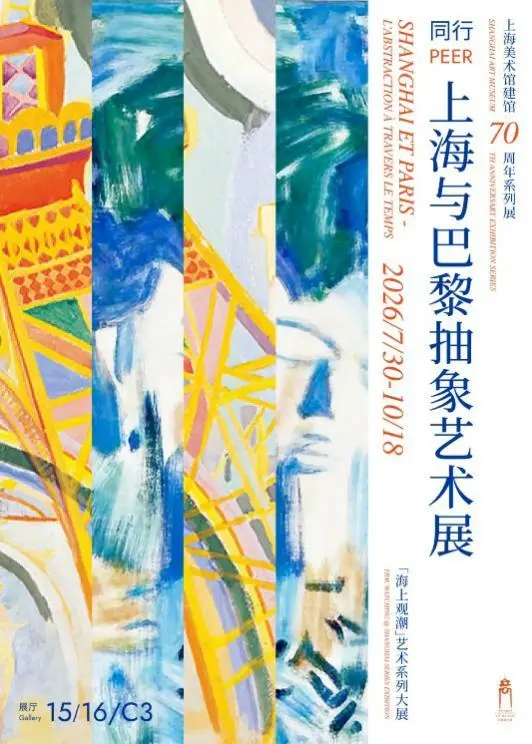
The exhibition “Shanghai et Paris – L’Abstraction à Travers le Temps” recently opened at the Shanghai Art Museum. Taking Shanghai as its vantage point, the exhibition traces more than a century of exchanges and mutual learning between Shanghai and Paris in abstract art. It brings together more than 100 works in a diverse range of media, including painting, photography, sculpture, and installation, systematically presenting how abstract art has been introduced, disseminated, transformed, and reinterpreted through exchanges between China and France.
Source: Shanghai Art Museum | China Art Museum, Shanghai
2. Asia’s Largest Book Exhibition on the Western Renaissance Opens
[Keywords: Book exhibition]
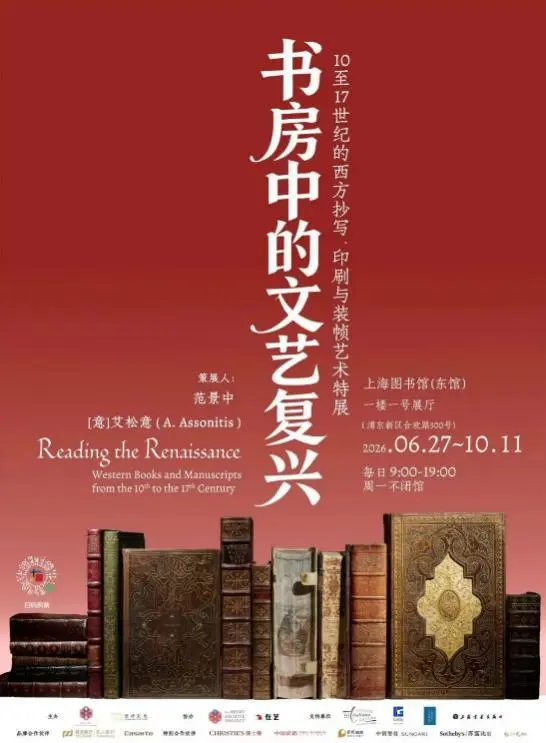
The special exhibition “Reading the Renaissance: Western Books and Manuscripts from the 10th to the 17th Century” recently opened at the Shanghai Library East. It is the first major Renaissance-themed exhibition on the Chinese mainland centered on books. Featuring 119 rare exhibits, including ancient Greek and Roman classics, humanist works, and contemporary paintings, sculptures, and cultural relics, the exhibition uses books as a narrative thread to systematically present the development of knowledge dissemination, intellectual transformation, and artistic creation in Europe from the 10th to the 17th century.
Source: Shanghai Tourism
3. Original Chinese Musical “Jane Eyre” to Premiere in Shanghai
[Keywords: “Jane Eyre”]
After two years of development and refinement, the original Chinese musical “Jane Eyre” will make its Shanghai debut at the North Bund AIA Grand Theatre from August 13 to 16, marking the start of its national tour.
Source: Shanghai Tourism