Shanghai Weekly Bulletin (Issue 159 No.3, September 2026) ( 2026.09.16 )
Laws and Regulations
National
1. SPC Issues Opinions on Lawfully Adjudicating AI-Related Disputes
[Keyword: AI]
The Supreme People’s Court (SPC) recently issued the Opinions of the Supreme People’s Court on Lawfully Adjudicating AI-Related Disputes. The document covers five main areas, including clarifying the guiding philosophy and basic principles for adjudication, regulating in accordance with the law tortious acts committed through the use of AI, and adjudicating AI-related IP disputes.
Source: SPC
2. Measures on Domestic Entities’ Withholding and Remittance of Value-Added Tax for Individuals Issued
[Keywords: Individuals, Value-added tax]
The Ministry of Finance and the State Taxation Administration recently issued the Measures for the Administration of Domestic Entities’ Withholding and Remittance of Value-Added Tax for Individuals. The document clarifies that where a domestic individual provides research and development services, software services, design services, consulting services, radio, film and television program (work) production services, cultural services, or educational services, the domestic entity making the payment shall act as the withholding agent. The document will take effect on November 1, 2026.
Source: Ministry of Finance
https://szs.mof.gov.cn/zhengcefabu/202609/t20260904_3996707.htm
Shanghai
1. Shanghai Issues Three-Year Action Plan with Key Tasks for Building a Quality-Driven City
[Keywords: Quality-Driven City]
The General Office of the Shanghai Municipal Government has issued the Three-Year Action Plan for Further Advancing the Development of Shanghai as a Quality-Driven City. By 2028, Shanghai aims to maintain its national lead in the manufacturing quality competitiveness index, increase the number of high-value invention patents per 10,000 residents to around 80, lead the formulation and revision of 36 additional international standards, establish 10 additional industrial metrology and testing centers and product quality inspection centers, add more than 100 national-level green factories, and foster 20 leading enterprises in green and smart industrial chains.
Source: Shanghai Municipal People’s Government
https://www.shanghai.gov.cn/nw12344/20260907/ceeb20cafc704f44892a90ec5d0d9a8b.html
2. Pudong Accelerates Development of Shanghai International Financial Center’s Core Area
[Keywords: Pudong, International financial center, Core area]
The Pudong New Area People’s Government recently issued the 15th Five-Year Plan for Accelerating the Development of the Core Area of Shanghai International Financial Center in Pudong New Area. The document sets out eight indicative targets and proposes six major tasks, including deepening high-standard financial opening-up and enhancing global resource allocation capabilities, as well as developing five functional centers and strengthening the reach and capacity of financial institutions.
Source: Pudong New Area People’s Government
https://www.pudong.gov.cn/zwgk/zwgk_zfxxgkml_atc_qt/2026/252/359886.html
3. Shanghai Maritime Safety Administration, Customs, and General Station of Exit and Entry Frontier Inspection Jointly Issue Circular on Services for Seafarers
[Keywords: Seafarers, Services]
Recently, the Shanghai Maritime Safety Administration, Shanghai Customs and the Shanghai General Station of Exit and Entry Frontier Inspection jointly issued the Circular on Several Measures to Facilitate Services for Seafarers. This marks the first time that port authorities in Shanghai have jointly and systematically introduced measures to facilitate services for seafarers. The document aims to make access to and from port areas smoother, life in port more convenient, and the protection of seafarers’ rights and interests more robust.
Source: Shanghai Customs 12360 Hotline
Q&A
An official from the Supreme People’s Court answers press questions on the Opinions on Lawfully Adjudicating AI-Related Disputes.
Q
The Opinions of the Supreme People’s Court on Lawfully Adjudicating AI-Related Disputes focuses on current prominent and difficult issues and responds directly to matters of concern to the public and the AI industry. How do the specific provisions of the Opinions properly balance the protection of rights and interests with innovation and development?
A
In his keynote address at the opening ceremony of the 2026 World AI Conference and High-Level Meeting on Global AI Governance, General Secretary Xi Jinping stressed the need to attach equal importance to development and security, understand the trends and patterns of AI development, and continuously improve relevant laws and regulations, policies and institutions, application standards, and ethical guidelines. These efforts will ensure that AI remains safe, reliable, and controllable, enabling this fine steed to run both swiftly and steadily.
The Opinions underscores the importance of giving equal weight to development and security. It focuses on lawfully regulating illegal activities involving the misuse and malicious use of AI and strengthening judicial protection of people’s rights and interests in the digital era, while unequivocally supporting technological and industrial innovation and safeguarding the sound development of AI. Specifically:
Regarding the protection of people’s rights and interests, the Opinions mainly contains the following provisions:
First, the Opinions strengthens judicial protection of personality rights and interests. Illegal acts such as AI face swapping, AI voice cloning, and doxxing have occurred from time to time, raising widespread public concern. The Opinions therefore clearly establishes clear liability rules for infringements of portrait rights, reputation rights, privacy rights, voice-related rights and interests, and other rights through the use of AI. This is intended to give full play to the regulatory and guiding role of judicial adjudication and promote the development of AI in a positive and responsible direction.
Second, the Opinions protects personal information rights and interests in accordance with the law. Large-scale, high-quality training data form the foundation for the development of AI technologies. To balance the protection of personal information rights and interests with the development of the AI industry, the Opinions, in accordance with the Civil Code, the Personal Information Protection Law, and other laws, clarifies that processing lawfully disclosed personal information within a reasonable scope for AI model training will generally not be deemed an infringement if the individual concerned has not expressly objected. However, where such processing has a significant impact on the individual’s rights and interests, the individual’s consent must be obtained in accordance with the law.
Third, the Opinions regulates in accordance with the law practices that infringe consumers’ lawful rights and interests, such as using big data to impose discriminatory pricing on existing customers and impersonating celebrities to promote products. Recently, algorithm-enabled discriminatory pricing has been repeatedly exposed, while the use of AI to impersonate celebrities for product promotion has also attracted widespread attention. Consumers cannot all be expected to identify such practices, and the law must respond promptly and decisively to protect their lawful rights and interests. Accordingly, the Opinions clarifies that where business operators uses algorithms to impose unreasonable differential treatment in transaction prices or other transaction terms for the same goods or services, thereby infringing another party’s lawful rights and interests and causing harm, the people’s court shall hold them liable for tort in accordance with the law. Where the use of AI to impersonate a celebrity for product promotion constitutes fraud, the people’s court shall uphold a consumer’s claim for punitive damages in accordance with the law.
Regarding support for innovation and development, the Opinions mainly contains the following provisions:
First, the Opinions accurately defines the principle for attributing liability in AI-related infringement cases, thereby avoiding the imposition of excessive liability at an early stage in the development of AI technologies and the industry, which could discourage innovation. The Opinions clarifies that legal liability arising from the use of AI to infringe civil rights and interests shall be governed by the fault liability principle, except where the law expressly provides for no-fault liability or presumed-fault liability.
Second, the Opinions requires strict compliance with the law when determining what constitutes an “AI product”, so as to avoid the overextension of product liability. The Opinions clarifies that the definition of “product” under the Product Quality Law shall be strictly applied and that AI products shall be limited to products with a tangible physical form, such as intelligent robots and autonomous vehicles. AI services without a tangible physical form are excluded.
Third, the Opinions fully and accurately implements the criminal justice policy of combining leniency with severity and handles AI-related criminal cases in accordance with the law. On the one hand, the Opinions emphasizes that criminal acts deliberately committed through the use of AI, including those that endanger national security, infringe citizens’ rights and interests, or disrupt social order, shall be severely punished in accordance with the law. On the other hand, the Opinions requires prudent handling in accordance with the law of innovative activities in the research, development, and application of AI, in strict adherence to the principle of legality and the principle that punishment should be commensurate with the crime and the offender’s culpability. In addition, as Vice President Tao explained earlier, the Opinions contains special provisions on the proper adjudication of AI-related IP disputes in accordance with the law. These provisions also fully embody the principle of supporting innovation and development within the framework of the rule of law.
Source: Supreme People’s Court
Expert Perspective
Tiered Adjudication and Matters Left Open by the Rules in AI Disputes: An Interpretation of and Practical Outlook on the Opinions of the Supreme People’s Court on Lawfully Adjudicating AI-Related Disputes (Part I)
By Fu Gang [Dacheng Law Offices]
[Article Overview]
The widespread application of AI technologies has given rise to new types of disputes involving personality rights and interests, IP rights, product liability, and other areas. The same technological process may also implicate different rights. This expert commentary examines the regulatory positioning and principal provisions of the Opinions of the Supreme People’s Court on Lawfully Adjudicating AI-Related Disputes, emphasizing that tiered legal assessments should be conducted with reference to the specific rights involved, the relevant technological stages, and the risks arising from particular applications. This article notes that the Opinions constitutes a judicial guidance document intended to harmonize adjudicative approaches and refine the application of law. Relevant rights of claim and determinations of liability must still be based on existing laws, and the Opinions cannot be used to create exemptions from liability beyond those provided by law or to establish new exclusive rights. At the same time, the Opinions addresses practical issues by coordinating substantive rules, the proof of technical facts, and judicial cooperation mechanisms, while leaving room for judicial interpretation and legislation on fundamental rights issues that require further study.
[Article Details]
The rapid iteration of AI technologies has driven equally rapid growth in related industries, giving rise to a wide range of “AI-enabled” products across different application scenarios. As barriers to their use continue to fall, AI is playing an increasingly prominent role across industries. Against this distinctive backdrop, new types of disputes arising from emerging technologies have continued to emerge. A key feature of AI disputes is that the same technological process may successively implicate rights of different legal natures. A model may involve the right of reproduction and personal information during data collection, personality interests in a person’s voice during fine-tuning, infringement of reputation when generating responses, and disputes over the right of communication through information networks during content distribution. If the entire business process is broadly characterized as the “use of AI”, the legal assessment may become an overall choice between supporting innovation and protecting rights. This may obscure the specific conduct involved, the elements of liability, and the sources of harm, thereby resulting in judicial errors.
Against this background, on September 7, 2026, the Supreme People’s Court issued the Opinions on Lawfully Adjudicating AI-Related Disputes (Fa Fa [2026] No. 10, hereinafter referred to as the “Opinions”). The Opinions comprises 24 articles in five parts and provides systematic guidance on personality rights and interests, general tort and product liability, IP rights, the proof of technical facts, and adjudication mechanisms. The Opinions was formulated on the basis of existing adjudicative experience, extensive consultation, and in-depth research. It focuses on prominent practical issues, incorporates common issues that have emerged in AI disputes into the existing legal framework, and further clarifies adjudicative approaches according to the specific rights involved, the relevant technological stages, and application risks. At the same time, the Opinions deliberately leaves appropriate room for further development, preserving space for future interpretation and legislation on fundamental rights structures that require further study and experience.
Drawing on existing legal practice, this article interprets the provisions of the Opinions, and examines its conditions of application and interrelationships, offers practical recommendations, and analyzes the reasons for and significance of the issues left open by the Opinions, as well as its future development.
I. Regulatory Status of the Opinions: Giving Specific Effect to Existing Law
(I) Adjudicative Guidance Based on Existing Laws
The Opinions provides guidance on adjudicative principles and rules based on existing laws, including the Civil Code, the Copyright Law, the Personal Information Protection Law, and the Civil Procedure Law. In assessing its legal effect, a distinction should be drawn between judicial documents that guide adjudication and specific rules governing the application of law that are formulated through statutory procedures and issued as judicial interpretations. At least on the basis of currently verifiable publication materials, the Opinions should be understood as a judicial guidance document intended to harmonize adjudicative approaches and refine the application of law. Substantive claims, elements of liability, and compulsory measures in adjudication must still be grounded in the corresponding legal provisions. The mere fact that the document was issued by the Supreme People’s Court does not mean that it may create general exemptions from liability beyond those prescribed by law or establish new exclusive rights.
Accordingly, in terms of its regulatory nature, the Opinions was issued in the form of a “Fa Fa” document and constitutes a judicial document intended to guide adjudication and harmonize the application of law. Substantive liability must still be determined under the Civil Code, the Copyright Law, other applicable laws, and relevant judicial interpretations. As a judicial guidance document, the Opinions serves to give specific effect to existing rules and coordinate the application of law across different cases. In terms of structure, Articles 4 through 8 focus on personality rights and interests and related remedies. Articles 9 through 11 address risks involving products, consumers, and road traffic. Articles 12 through 16 concern IP rights, open-source collaboration, technology contracts, and data use. Articles 17 through 20 improve evidentiary procedures and regulate unlawful and criminal conduct. Articles 21 through 24 improve dispute resolution, adjudicative guidance, and coordination mechanisms. These provisions are interconnected. They define the subjects of substantive legal assessment while improving the conditions for ascertaining technical facts and enforcing remedies.
[To be continued]
One Week in Shanghai
Latest News
1.Shanghai–Suzhou Innovation Cluster Ranks Sixth Globally
[Keywords: Innovation cluster]
Recently, the World Intellectual Property Organization (WIPO) released its 2026 Ranking of World's Top 100 Innovation Clusters. China ranked first globally in the number of top 100 innovation clusters for the fourth consecutive year. The Shenzhen-Hong Kong-Guangzhou innovation cluster retained the top spot globally, while the Shanghai–Suzhou innovation cluster ranked sixth.
Source: China National Intellectual Property Administration
2.2026 World Laureates Foundation Prize Winners Announced in Shanghai’s Lingang Special Area
[Keywords: World Laureates Foundation Prize]
Recently, the winners of the 2026 World Laureates Foundation Prize (WLF Prize) were announced in Shanghai’s Lingang Special Area. This marked the fifth presentation of the WLF prize since its establishment in 2021, with 11 scientists receiving the honor.
Source: Shanghai Lingang
3.Yangtze River Delta–Hong Kong Joint Innovation Centre Established in Pudong
[Keywords: Yangtze River Delta–Hong Kong Joint Innovation Centre]
The Yangtze River Delta–Hong Kong Joint Innovation Centre, jointly established by the National Innovation Center par Excellence (NICE) and the Hong Kong Productivity Council (HKPC), was recently inaugurated in Pudong. The Hong Kong Productivity Council Yangtze River Delta Centre was also officially unveiled and began operations at the Zhangjiang headquarters of the NICE. It is the HKPC’s first regional headquarters established outside the Guangdong-Hong Kong-Macao Greater Bay Area.
Source: Pudong Release
Corporate Activities
Infineon Distribution Center (China) Customization Project Topped Out and Infineon China Sample Center Unveiled
[Keywords: Infineon]
Recently, a topping-out ceremony for the Infineon Distribution Center (China) Customization Project and an unveiling ceremony for the Infineon China Sample Center were held in Pudong. With a total floor area of approximately 43,000 square meters, the Customization Project is expected to commence operations by the end of 2027. Upon completion, it will become Infineon’s only integrated logistics center worldwide combining finished-product distribution, sample supply, and wafer storage. The newly inaugurated Sample Center will further shorten response times in product development between Infineon and its customers, accelerate sample delivery, and provide local customers with more efficient and convenient localized services.
Source: Smart Free Trade Zone
Forums and Exhibitions
1.2026 Zhangjiang Pharma Valley Conference and Shanghai International Biopharma Industry Week to Take Place from September 17 to 20
[Keywords: Zhangjiang Pharma Valley Conference, Shanghai International Biopharma Industry Week]
The 2026 Zhangjiang Pharma Valley Conference and Shanghai International Biopharma Industry Week, also known as BioShanghai Week, will take place from September 17 to 20 at the Zhangjiang Science Hall in Shanghai. The event will bring together key decision-makers and participants from across the global biopharmaceutical value chain. Attendees will engage directly with leading industry figures, gain a deeper understanding of the underlying regulatory rationale, and anticipate future changes in global biopharmaceutical rules, emerging technological trends, and industry development.
Source: International Services Shanghai
https://english.shanghai.gov.cn/en-Latest-WhatsNew/20260910/da5874f188fa4003ad810bccdee74a96.html
2.2026 Inclusion Conference on the Bund Opens in Shanghai
[Keywords: Inclusion Conference on the Bund]
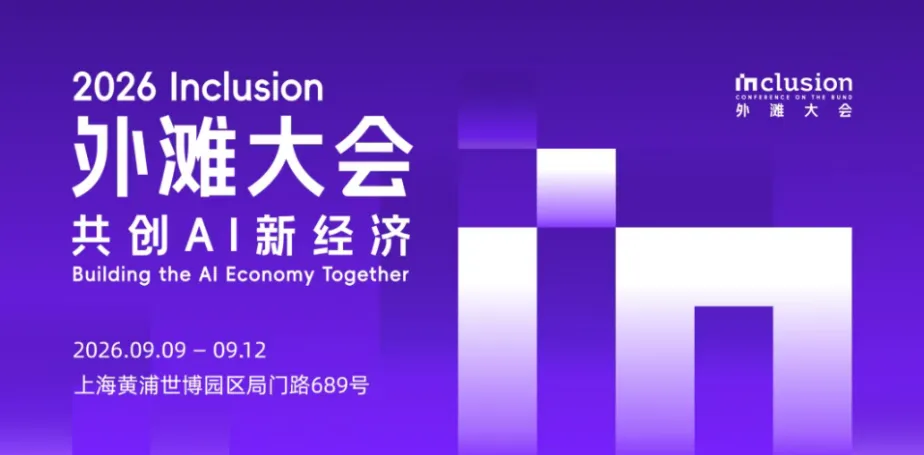
On September 10, the opening ceremony and main forum of the 2026 Inclusion Conference on the Bund were held in Shanghai. Under the theme “Building the AI Economy Together”, Nobel laureates in economics, leading scientists, industry leaders, and young entrepreneurs came together to discuss how AI can be transformed into new productive forces, create new economic opportunities, and enable more people to share in the benefits of growth brought about by technological progress.
Source: Inclusion Conference on the Bund
Culture & Arts
1.The 3rd Shanghai International Light Festival to Begin on September 17
[Keywords:Shanghai International Light Festival]

The 3rd Shanghai International Light Festival will be held from September 17 to October 16, with “Light of Shanghai” designated as its permanent theme. Featuring one main venue, 16 sub-venues, and 158 themed activities, the festival will present domestic and international visitors and local residents with an immersive, diverse, and spectacular audiovisual feast of light and shadow.
Source:International Services Shanghai
https://english.shanghai.gov.cn/en-PlanANightOut/20260909/5746f18eb7bd48b599855653cb72abde.html
2.2026 International Audio-Visual Arts Carnival to Open in Jing’an on September 24
[Keywords: International Audio-Visual Arts Carnival]
The 2026 International Audio-Visual Arts Carnival will be held in Jing’an from September 24 to October 18. Under the theme “Future Perception · Universal Resonance”, the event will establish a multidimensional “1+2+N” program comprising four major sections: the International Audio-Visual Arts Experience Exhibition, the “Audio-Visual Wonderland” immersive performance, the International Audio-Visual Arts and Technology High-End Salon, and the International Audio-Visual Arts Gala. The event will integrate cutting-edge technology and artistic innovation into the city’s public cultural life.
Source: Shanghai Jing’an
3.la Galerie du 19M SHANGHAI Set to Arrive in Shanghai
[Keywords: CHANEL, Fashion]

Starting September 25, la Galerie du 19M SHANGHAI, presented by CHANEL, will be on view on the third floor of the Museum of Art Pudong. The exhibition comprises three sections: the “Les Maisons” section, the group exhibition “A Sense of Touch”, and a newly conceived edition of “Lesage: 100 Years of Fashion and Decoration”. Talks, hands-on workshops, and exchange activities for visitors of all ages will also be held during the exhibition.
Source: Museum of Art Pudong