Shanghai Weekly Bulletin (Issue 160 No.4, September 2026) ( 2026.09.23 )
Laws and Regulations
National
1.Nine Authorities Issue 15th Five-Year Plan for Intelligent Connected New Energy Vehicle Industry
[Keywords: Intelligent connected new energy vehicles]
Recently, the Ministry of Industry and Information Technology (MIIT) and eight other authorities issued the 15th Five-Year Plan for the Development of the Intelligent Connected New Energy Vehicle Industry. The plan proposes that, by 2030, new energy passenger vehicles and commercial vehicles will account for 70% and 40%, respectively, of new vehicle sales in their respective segments in the domestic market, and vehicles equipped with autonomous driving capabilities will be used on a large scale. Key tasks include strengthening technological innovation, upgrading the industrial system, advancing cross-sector integration, establishing a scientific and efficient industry governance system, and opening up new prospects for global industrial cooperation.
Source: MIIT
https://www.miit.gov.cn/zwgk/zcwj/wjfb/tz/art/2026/art_47e6f99ffbe945279ef3ffd23c5b3631.html
2.SAMR Seeks Public Comments on Measures for the Administration of Foreign-Language Versions of National Standards
[Keywords: Foreign-language versions of national standards]
Recently, the State Administration for Market Regulation (SAMR) sought public comments on the Measures for the Administration of Foreign-Language Versions of National Standards (Draft for Comment). The document specifies that mandatory national standards, standards required for import and export trade, and national standards that help Chinese products, technologies and services go global should all be translated. Government departments, social organizations, enterprises, public institutions and citizens may, according to their needs, submit proposals for foreign-language versions of national standards to the State Council department in charge of standardization. Comments may be submitted until October 10.
Source: SAMR
https://www.samr.gov.cn/hd/zjdc/art/2026/art_52ab04656e214654b6255ef099d6bc01.html
3.CAC Releases Typical Enforcement Cases in Fields Such as Cybersecurity and Data Security
[Keywords: Cybersecurity, Typical cases]
Recently, the Cyberspace Administration of China (CAC) released 10 typical enforcement cases concerning cybersecurity, data security and personal information protection. The cases involve website tampering, installation of malicious programs, data breaches, personal information leaks, unlawful collection and use of personal information, unlawful cross-border transfer of personal information, failure to label AI-generated or synthesized content as required, and provision of new technologies and applications online without prior assessment.
Source:CAC
https://www.cac.gov.cn/2026-09/15/c_1790876152357946.htm
4.AI Safety Governance Framework 3.0 Released
[Keywords: AI, Safety Governance]
Recently, the National Technical Committee 260 on Cybersecurity of SAC (TC260) released the AI Safety Governance Framework 3.0. The framework retains the core approach of ‘risk classification, technical responses and comprehensive governance’. It updates risk classifications in line with the latest developments and refines technical responses and comprehensive governance measures. These efforts aim to build consensus on AI safety governance, enhance risk prevention and response capabilities, and ensure that AI technologies benefit humanity.
Source: CAC
5.China and Cambodia Implement Mutual AEO Recognition from September 15
[Keywords: Cambodia, AEO]
Recently, the General Administration of Customs issued the Announcement on Implementing Mutual Recognition of Authorized Economic Operators (AEOs) Between China and Cambodia. From September 15, 2026, China Customs and Cambodia Customs recognize each other’s Authorized Economic Operators (AEOs).
Source: Customs Release
Shanghai
1.Shanghai Issues Measures for Revoking Fraudulent Enterprise Registrations
[Keywords: Fraudulent enterprise registrations]
Recently, the Shanghai Municipal Administration for Market Regulation issued the Shanghai Measures for Revoking Fraudulent Enterprise Registrations. The document sets out rules on the application, acceptance, investigation, decision-making, service and enforcement procedures for revoking fraudulent enterprise registrations. It took effect on August 23, 2026, and will remain valid until August 22, 2031.
Source: Shanghai Municipal Administration for Market Regulation
https://scjgj.sh.gov.cn/007/20260915/2c984a72a08215f201a0a2d358495108.html
2.Shanghai Regulatory Bureau of the National Financial Regulatory Administration Issues Special Guidelines to Improve the Quality and Efficiency of Technology Finance and Support Greater Self-Reliance and Strength in Science and Technology
[Keywords: Technology finance]
Recently, the Shanghai Regulatory Bureau of the National Financial Regulatory Administration issued the Opinions on Advancing the Quality and Efficiency of Technology Finance in Shanghai’s Banking and Insurance Sectors. The document introduces 17 measures in four areas to promote a virtuous cycle among technology, industry and finance and support the development of the Shanghai (Yangtze River Delta) International Science and Technology Innovation Center.
Source:Shanghai Finance
3.Shanghai Customs Further Expands Scope of Digital Customs Declaration Hall Pilot
[Keywords: Digital Customs Declaration Hall]
Recently, Shanghai Customs issued the Circular on Further Expanding the Scope of the Digital Customs Declaration Hall Pilot. The document states that, from September 17, 2026, Shanghai Customs will implement the Digital Customs Declaration Hall pilot at Pudong Airport Customs in two phases, covering three types of pilot business scenarios.
Source: Shanghai Customs 12360 Hotline
4.Guidelines on “Shanghai Sci-Tech Credit Loans” Released
[Keywords: Shanghai Sci-Tech Credit Loans]
Recently, the Shanghai Municipal Science and Technology Commission and the Shanghai Branch of the People’s Bank of China issued the Guidelines on “Shanghai Sci-Tech Credit Loans”. The document encourages banks to develop innovative technology credit products focusing on key links in the sci-tech innovation chain to meet the financing needs of technology enterprises throughout their life cycles. It sets out four priority areas and three supporting policies.
Source:Shanghai Science and Technology
Q&A
An official from the Ministry of Justice answers questions at a press conference held by the State Council Information Office (SCIO) on implementing the tasks of advancing law-based governance in all respects and judicial administration during the 15th five-year plan period, and supporting high-quality economic and social development.
Q
From the perspective of its government legislative functions, how does the Ministry of Justice support high-quality development and help foster a world-class, market-oriented, law-based and internationalized business environment?
A
General Secretary Xi Jinping has emphasized that the rule of law provides the best business environment. As the State Council department responsible for the rule of law, the Ministry of Justice has coordinated and planned relevant legislative work in recent years, using high-quality and efficient legislation to continuously improve the business environment and support high-quality development. Its work has focused primarily on the following areas:
First, the Ministry of Justice is leading the drafting of regulations on building a unified national market to provide strong legal safeguards for advancing this initiative in greater depth. General Secretary Xi Jinping attaches great importance to building a unified national market and has repeatedly set out clear requirements for formulating these regulations. To implement his important instructions, the Ministry of Justice and the National Development and Reform Commission are working intensively to lead the research and drafting of the regulations. The regulations will fully implement the basic requirements of “five unifications and one opening up”. They will address prominent issues such as local protectionism, market fragmentation and “involution-style” competition, and use binding regulatory provisions to resolutely remove blockages and bottlenecks impeding the development of a unified national market, strengthen domestic economic circulation and facilitate the interplay between domestic and international economic circulation. At the preliminary stage, we solicited information on blockages and bottlenecks, as well as legislative requests, from more than 150 entities, including relevant departments of central Party and state institutions, provincial-level people’s governments, enterprises and industry associations. On this basis, we conducted repeated reviews and revisions and have prepared an initial draft. As the next step, we will solicit public comments in accordance with established procedures. We hope that the public will follow and support this legislative initiative.
Second, the Ministry of Justice is continuously improving laws and regulations across all areas of the economy, with a focus on building a stable, fair, transparent and predictable institutional environment. Firstly, it is fully implementing the Private Sector Promotion Law. This law, which took effect last year, is China’s first foundational law specifically concerning the private sector. It plays a fundamental role in consolidating the foundations for the private sector’s development, stabilizing expectations and supporting its long-term growth. Following the promulgation of the Private Sector Promotion Law, the Ministry of Justice and the National Development and Reform Commission have actively encouraged and guided local authorities and government departments to accelerate the introduction of supporting systems and measures. These efforts aim to fully implement the systems and requirements of the Private Sector Promotion Law for encouraging, supporting, guiding and regulating the private sector, carry out the requirements of the Central Economic Work Conference, and continuously improve the environment for private sector development. To date, local authorities have introduced more than 30 regulations and rules, while government departments have issued over 100 supporting systems and measures. Secondly, we have strengthened legislation in the financial sector. As Vice Minister Li Mingzheng just mentioned, the draft Financial Law has been submitted to the Standing Committee of the National People’s Congress for deliberation. We have also revised laws and regulations including the Law on the People’s Bank of China, the Banking Supervision and Administration Law and the Regulation on the Supervision and Administration of Securities Companies. These efforts aim to comprehensively strengthen financial regulation, prevent and defuse financial risks, protect investors’ rights and interests, and promote high-quality financial development. In addition, we have revised the Bidding and Tendering Law to promote the fair, well-regulated and sound development of the bidding market. We have also revised the Price Law, with a focus on addressing pricing violations that undermine the market environment, including disorderly competition involving low-quality goods at low prices.
Third, the Ministry of Justice has strengthened the rule of law in foreign-related fields and remained committed to advancing high-standard opening up. In recent years, we have revised and promulgated the Foreign Trade Law and the Maritime Code, and are currently revising the Customs Law. One important feature shared by these revisions is their focus on continuously enhancing China’s trade facilitation, improving the environment for openness and cooperation, and achieving high-standard opening up. Another priority in strengthening the foreign-related rule of law is effectively safeguarding the security of China’s overseas assets and the overseas interests of Chinese enterprises and citizens. As the “going global” initiative continues to deepen, it has become increasingly common for Chinese enterprises and citizens to conduct business overseas. On the one hand, we guide and require them to comply with the laws, cultural traditions and customs of host countries. On the other hand, we continue to strengthen the foreign-related rule of law development to effectively protect the lawful rights and interests of Chinese enterprises and citizens. We have formulated and issued administrative regulations on overseas investment and the protection of industrial and supply chain security. As the next step, we will revise the Regulation on the Administration of Foreign Contracted Projects and the Regulation on the Administration of Foreign Labor Service Cooperation. We are also accelerating research on dedicated legislation to protect overseas interests. Through a systematic development of the foreign-related rule of law, we aim to continuously strengthen the confidence of Chinese citizens and enterprises in “going global”.
During the 15th Five-Year Plan period, the Ministry of Justice will continue to thoroughly implement General Secretary Xi Jinping’s important instructions and the decisions and arrangements of the Communist Party of China Central Committee and the State Council. It will strengthen institutional development with greater intensity, quality and efficiency, providing stronger institutional support for improving the business environment, stimulating market vitality, strengthening endogenous drivers of development, continuously expanding opening up, and promoting the long-term, stable and sound development of China’s economy.
Source: SCIO
http://www.scio.gov.cn/live/2026/39415/tw/
Expert Perspective
Tiered Adjudication and Matters Left Open by the Rules in AI Disputes: An Interpretation of and Practical Outlook on the Opinions of the Supreme People’s Court on Lawfully Adjudicating Cases Involving AI-Related Disputes (Part II)
By Fu Gang [Dacheng Law Offices (Shanghai)]
[Continued from the Previous Issue]
[Article Overview]
This issue’s expert analysis examines the approach to determining liability for AI-related torts under the Opinions of the Supreme People’s Court on Lawfully Adjudicating Cases Involving AI-Related Disputes (hereinafter referred to as the “Opinions”). The article explains that the Opinions is based on general fault liability while retaining special liability rules concerning product liability, personal information protection and other areas, thereby avoiding the uniform application of a single form of liability solely on the basis of technological characteristics. Drawing on the “AI hallucination” case, the author further examines the duties of care at different stages, including data selection, model design, scenario configuration, prompt templates, output screening and external publication, based on the actual control exercised by foundation model developers, application providers and users. The article argues that, when hearing such cases, courts should ascertain each party’s specific conduct and decision-making authority, conduct a tiered assessment within the existing civil liability framework, and allow room for more detailed rules tailored to different technological scenarios.
[Article Details]
I. Regulatory Status of the Opinions: Giving Specific Effect to Existing Law
(II) Retaining Special Liability Rules Based on the General Principle of Fault Liability
The Opinions clarifies that legal liability arising from the use of AI to infringe civil rights and interests should be governed by the principle of fault liability, unless the law expressly provides for no-fault liability or presumed-fault liability. This brings AI-related disputes within the existing liability framework under the Civil Code. Fault in ordinary tort cases is assessed in accordance with Article 1,165, while special liability applies where provided by law. This position contrasts sharply with some scholars’ earlier proposal that models should bear no-fault liability for generated content. It may even be said to have settled the major controversy over the type of legal liability applicable to models, representing significant progress with substantial practical implications.
This allocation of liability also preserves room for the application of special laws. Where damage is caused by a defect in an AI product, product liability may still apply. Where the processing of personal information infringes personal information rights and interests and causes damage, the presumed-fault rule under Article 69 of the Personal Information Protection Law still applies. General fault liability, presumed-fault liability and no-fault liability therefore apply respectively as prescribed by law. The degree of model autonomy, the opacity of algorithms and the level of risk primarily inform the assessment of specific duties and fault. The mere use of AI is insufficient to determine a uniform basis of liability.
Article 3 further specifies the factors for determining fault, including the specific application scenario, degree of autonomy, technological and information transparency, potential risks and scope of impact, the preventive and loss-mitigation measures taken by developers and providers and their technical feasibility, as well as users’ ability to foresee and control risks. This framework provides courts with a common set of factors for determining the duty of care while allowing differentiated assessments across various scenarios. In practice, liability should be determined by reference to the measures available to different parties. Foundation model developers control data selection, model design and testing mechanisms. Application providers control use scenarios, retrieved materials, prompt templates, risk warnings and complaint handling. Users control specific instructions, input materials, output screening and external publication. A party may perform several roles simultaneously or control only certain stages. Courts should ascertain each party’s actual conduct and decision-making authority and match them with the specific duties breached.
The relevant principles have already been reflected in judicial practice. For example, in the “AI hallucination” case heard by the Hangzhou Internet Court, a user sought advice on university applications for the National College Entrance Examination (NCEE). The model generated incorrect information about a university campus and stated in a subsequent exchange that it was willing to pay RMB 100,000 in compensation. The court first examined whether that statement could be attributed to the service provider and then assessed liability based on the tort claim ultimately pursued by the plaintiff. The court held that the model did not qualify as a civil subject. In the general-purpose conversational scenario at issue and under the relevant agreements and prompts, there was also no evidence that the company had intended, through the model’s configuration, to offer compensation or voluntarily agreed to be bound by the generated content. The model’s output concerning compensation therefore could not directly serve as a basis for requiring the company to pay RMB 100,000. Regarding the tort claim in the case, the court characterized the application as a continuously provided generative AI service and applied the general principle of fault liability. In light of the specific circumstances, it examined the service provider’s duty to provide clear notices and explanations concerning the service’s functions, as well as its basic duty to ensure the reliability of generated content.
The general fault liability, duty to provide clear notices and explanations, and basic duty to ensure content reliability identified in the case are consistent with the analytical approach set out in Article 3 of the Opinions. The Opinions further provides a standardized list of factors, including application scenarios, transparency and technical feasibility, enabling a more specific assessment of the duty of care in future cases.
[To be continued]
One Week in Shanghai
Latest News
Shanghai Ranks Third Among Global Asset Management Centers for First Time
[Keywords: Global asset management centers]
Recently, the CEIBS Lujiazui International Institute of Finance (CLIIF) released the 2026 Global Asset Management Center Evaluation Index. Shanghai ranked third globally, marking its first entry into the global top three.
Source: Shanghai Observer
https://www.jfdaily.com/staticsg/res/html/web/newsDetail.html?id=1177520&v=2.2&sid=67
Corporate Activities
Elsewedy Electric’s Wholly Owned Subsidiary Begins Operations in South Hongqiao
[Keywords: Elsewedy Electric]
Recently, Egypt-based Elsewedy Electric announced that its wholly owned subsidiary, Elsewedy Electric (Shanghai) Co., Ltd., officially began operations in South Hongqiao. The company will focus on identifying high-quality domestic suppliers, strengthening quality control and establishing a long-term supplier cooperation system. It will promote the export of Chinese power equipment and new-energy products and technologies to Middle Eastern and African markets, while pursuing energy project cooperation and industrial park promotion. These efforts will establish a two-way channel between China’s manufacturing supply chains and overseas markets in Asia and Africa.
Source: Minhang Today
Forums and Exhibitions
9th CIIE Opens Registration for Individual Visitors
[Keywords: CIIE]
The ninth China International Import Expo (CIIE) will be held at the National Exhibition and Convention Center (Shanghai) from November 5 to 10, 2026. Starting September 9, individual visitors from China and abroad can register online through the CIIE’s official website (www.ciie.org), app or WeChat mini program by selecting ‘Individual Visitor Registration’. Registration for individual visitors closes at midnight on October 20. All visitors must complete online registration in advance.
Source: International Services Shanghai
https://english.shanghai.gov.cn/en-Latest-WhatsNew/20260915/b894b1c527a84bf693216ed3d1d336e4.html
Competition Events
2026 Shanghai Equestrian Masters to Kick Off on September 28
[Keywords: Shanghai Equestrian Masters]
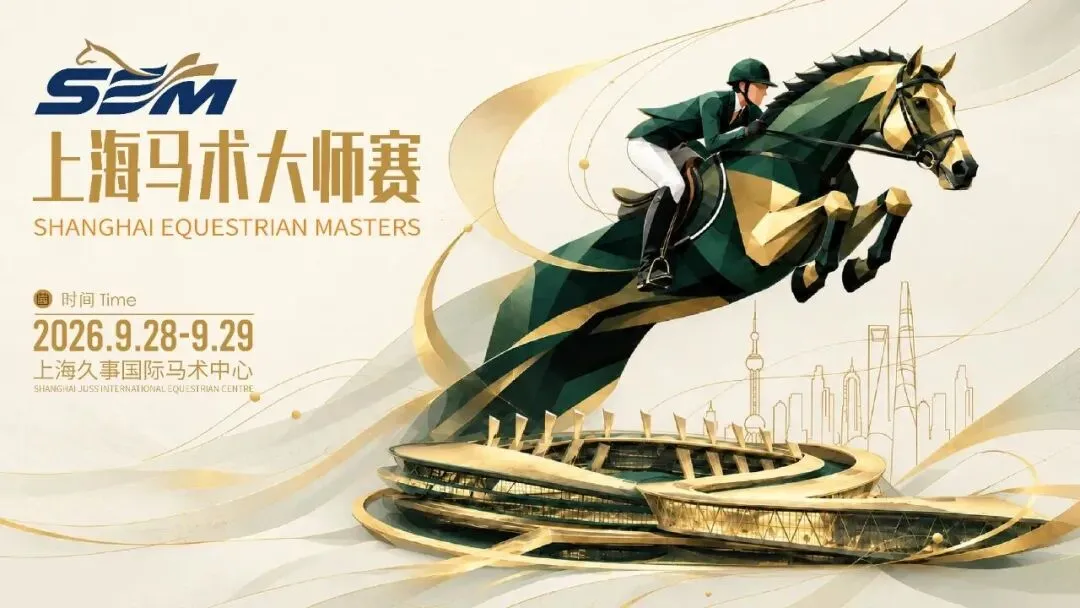
The 2026 Shanghai Equestrian Masters will take place from September 28 to 30, featuring two disciplines: show jumping and dressage. Show jumping competitions will be held from September 28 to 29 across four levels: the 105 cm Open, 140 cm Shanghai Grand Prix, 125 cm Juss Sports Championship and 115 cm Elite Competition. The International Dressage Charity Show will take place on September 30, featuring the J14-18 Team Competition test and the CH12-14 Individual Competition test.
Source: International Services Shanghai
https://english.shanghai.gov.cn/en-SportsEvents/20260916/fcb547094f9444429311848fd294ff2d.html
Culture & Arts
1.2026 Qiantan Lifestyle Season Opens
[Keywords: Qiantan Lifestyle Season]
On September 20, the 2026 Qiantan Lifestyle Season, themed “Qiantan Lifestyle”, officially opened. Over the following 43 days, the event will center on five themes: flowers, light, music, markets and more. Colorful floral displays, spectacular light installations, riverside music, trendy markets and diverse activities will extend from Qiantan’s core commercial district to its waterfront, creating a new one-stop, all-scenario model for relaxed autumn getaways by the river.
Source:Pudong Release
2.East Bund Art Tour Series “Discover the Great Shang Through Art” Themed Garden Fair to Open on September 25
[Keywords: Shang civilization, Garden fair]
The “Discover the Great Shang Through Art” themed garden fair, the inaugural event of the East Bund Art Tour Series, will open on September 25 with free admission. The event is presented in special collaboration with the Yinxu Museum in Anyang, China’s first major national museum to offer a panoramic presentation of Shang civilization. It will bring the legacy of the distant Shang civilization to the east bank of the Huangpu River, inviting visitors to follow oracle bone inscriptions through 3,000 years of history and revisit the cultural splendor of the Great Shang during the traditional festival.
Source: Museum of Art Pudong
3.Shanghai Symphony Orchestra’s Music Map Classroom Returns for the 2026–27 Season
[Keywords: Music Map Classroom]
Tickets are now available for the Shanghai Symphony Orchestra’s 2026-27 music season. Music Map Classroom offers six themed chapters spanning the history of music: Classical Period, Romantic Period, Western and Oriental Music, Dance Music, Opera Music and Musical Nationalism. The series has been comprehensively upgraded from previous years, with Musical Nationalism added as a new dedicated program.
Source:Shanghai Tourism