Shanghai Weekly Bulletin (Issue 165 No.1, November 2026) ( 2026.11.04 )
Laws and Regulations
National
1.Notice Issued on Extending Stay for APEC Business Travel Card Holders
[Keywords: APEC Business Travel]
To further facilitate business travel within the Asia-Pacific region, China has decided to extend the maximum stay for APEC Business Travel Card holders in China from 60 days to 90 days, effective November 1, 2026.
Source: Consular Express
2.Central Cyberspace Affairs Commission Issues the 15th Five-Year Plan for National Informatization
[Keyword: Informatization]
The Central Cyberspace Affairs Commission recently issued the 15th Five-Year Plan for National Informatization. Focusing on the development goals for the 15th Five-Year Plan period, the document sets out an overall framework of “building three systems, improving five capabilities, and strengthening two pillars”, and outlines specific tasks in 10 areas.
Source: Cyberspace China
3.State Council General Office Issues Guidelines to Promote Employment-Friendly Development amid AI Advances
[Keywords: AI, Employment]
The General Office of the State Council recently issued the Guidelines on Adapting to Advances in AI to Promote Employment-Friendly Development. The document sets out 18 measures in six areas, including boosting AI’s job-creation potential and making AI adoption more employment-friendly.
Source: Website of the Chinese Government
https://www.gov.cn/zhengce/content/202610/content_7084107.htm
4.Newly Revised Provisions on the Administration of Filing of Importers and Exporters of Imported Food Released
[Keywords: Imported food, Exporter filing]
The General Administration of Customs recently issued an announcement releasing the revised Provisions on the Administration of Filing of Importers and Exporters of Imported Food. The revisions focus on areas including streamlining filing procedures and requirements, standardizing the categories of imported food covered by filing, shortening filing processing times, and strengthening whole-chain filing supervision. The provisions took effect on October 23.
Source: General Administration of Customs
5.SAFE Proposes Further Measures to Facilitate Cross-Border Investment and Financing
[Keywords: Cross-border, Investment and financing]
The State Administration of Foreign Exchange (SAFE) recently began soliciting public comments on the Notice on Matters Concerning Further Optimizing Policies for Facilitating Cross-Border Investment and Financing (Draft for Comments). The document contains 11 policy measures, including four on direct investment, four on cross-border financing, and three on optimizing foreign exchange registration. The deadline for submitting comments is November 22, 2026.
Source: SAFE
https://www.safe.gov.cn/safe/2026/1023/28018.html
Shanghai
1.Shanghai Unveils Action Plan to Promote High-Quality Development of SMEs
[Keywords: SMEs, High-quality development]
The General Office of the Shanghai Municipal People’s Government recently issued the Shanghai Action Plan for Promoting the High-Quality Development of Small and Medium-Sized Enterprises. The plan sets out 21 tasks under nine initiatives, including regulating market order, strengthening financing services, clearing overdue payments, and reducing burdens on enterprises.
Source: Shanghai Municipal People’s Government
https://www.shanghai.gov.cn/nw12344/20261029/ca10d092176d4e85a6c7ff181701513d.html
2.Six Shanghai Authorities Issue Guidelines Encouraging Enterprises to Establish Supply Chain Headquarters
[Keywords: Enterprises, Supply chain headquarters]
Six authorities, including the Shanghai Municipal Commission of Commerce, recently issued the Several Opinions of Shanghai Municipality on Encouraging Enterprises to Establish Supply Chain Headquarters. Enterprises recognized as supply chain headquarters will enjoy supporting policies such as customs clearance and trade facilitation, logistics and warehousing support, and high-quality financial services. The document took effect on October 20, 2026, and will remain valid until October 19, 2031.
Source: Shanghai Municipal Commission of Commerce
https://sww.sh.gov.cn/zwgkhsgwj/20261027/cf4ff6c6fb804babb7939faf0ce2ed7c.html
3.Shanghai Financial Regulatory Bureau Unveils Special Measures to Promote High-Quality Development of Digital Finance in Banking and Insurance Sectors
[Keywords: Banking, Insurance, Digital finance]
The Shanghai Financial Regulatory Bureau recently issued the Several Measures for Promoting the High-Quality Development of Digital Finance in Shanghai’s Banking and Insurance Sectors. The document introduces 17 measures in five areas to implement the National Financial Regulatory Administration’s tasks for the high-quality development of digital finance and support the development of Shanghai as an international financial center.
Source: Shanghai Finance
4.Shanghai Accelerates Development of Next-Generation Intelligent Manufacturing
[Keywords: Intelligent manufacturing]
The Shanghai Municipal Commission of Economy and Informatization recently issued the Shanghai Action Plan for Accelerating the Development of Next-Generation Intelligent Manufacturing. The document sets out the “54321” targets for next-generation intelligent manufacturing and introduces 19 specific measures under four major initiatives, including advancing the supply of next-generation intelligent manufacturing solutions, fostering foundational innovation in “AI + Manufacturing”, cultivating smart factories at different levels, and building a next-generation intelligent manufacturing ecosystem.
Source: Shanghai Municipal Commission of Economy and Informatization
5.Shanghai to Advance Innovative Development of Satellite Internet Industry
[Keywords: Satellite internet industry]
Six authorities, including the Shanghai Municipal Commission of Economy and Informatization, recently issued the Shanghai Action Plan for the Innovative Development of the Satellite Internet Industry (2027–2030). The document sets out four key initiatives covering core technology breakthroughs, infrastructure enhancement, industrial hub development, and demonstration of innovative applications. By 2030, Shanghai aims to further optimize its industry cluster, foster more than 100 high-quality enterprises and other entities, and expand the core industry to over RMB 80 billion, among other targets.
Source: Shanghai Municipal Commission of Economy and Informatization
https://www.sheitc.sh.gov.cn/cyfz/20261026/96dc7fe4e44e4dcf90b6fcc411bef863.html
6.Implementation Measures for the Pilot Program to Facilitate Overseas Investment of Income from Assumed Cross-Border Reinsurance Business Released
[Keywords: Reinsurance, Overseas-sourced funds used for overseas investment]
Recently, four authorities, including the Office of the CPC Shanghai Municipal Committee for Financial Affairs, jointly issued the Implementation Measures for the Pilot Program to Facilitate Overseas Investment of Income from Assumed Cross-Border Reinsurance Business. The pilot program is open to domestic insurance institutions. Pilot institutions and their branches may use the net income from assumed cross-border reinsurance business generated through on-exchange transactions at the Reinsurance Trading Center for overseas investment, in accordance with the relevant regulations governing overseas investment by insurance funds.
Source: Administration of the Lin-gang Special Area
https://www.lingang.gov.cn/html/website/lg/index/news/list/p2115388264087093250.html?sessionid=
Q&A
A relevant official from the Shanghai Municipal Commission of Economy and Informatization answers media questions at a press briefing held by the Information Office of Shanghai Municipality on the Shanghai Action Plan for Promoting the High-Quality Development of Small and Medium-Sized Enterprises
Q
Small and medium-sized enterprises (SMEs) are the “capillaries” of the urban economy. What new measures will the commission introduce to foster and serve these enterprises going forward?
A
SMEs indeed play a very important role in the economy. In our work, we have always adopted a problem-oriented approach. Some prominent issues remain in serving SMEs. It is difficult for services to reach them effectively because these enterprises are numerous and widely dispersed. The key to addressing these issues is to establish a sound SME service system.
In terms of the service system, we adopt category-specific measures. For the large and diverse SME community, we rely on district-level SME service centers and service providers in subdistricts, towns, industrial parks, and commercial buildings to improve basic services for SMEs. On the government side, we have established a team of enterprise service specialists and implemented the “service package” system for key enterprises. More than 6,500 enterprise service specialists have been assigned at the municipal and district levels. On the social-sector side, we have brought together teams of volunteer experts to provide enterprises with services such as legal consulting, market expansion, and investment and financing matchmaking.
In terms of targeted service matchmaking, to better reach SMEs with genuine needs, we have launched a series of branded events. We have continued to enhance the “Shanghai Enterprise Tour” service brand and organized activities promoting collaboration among enterprises of all sizes, including the “100 Events for 10,000 Enterprises” visits to central and local state-owned enterprises in Shanghai and study programs on new quality productive forces. This year, we have facilitated in-depth matchmaking between more than 400 enterprises and central and local state-owned enterprises. To address enterprises’ financing needs, we have continued to organize “One Industry Chain per Month” financing matchmaking activities.
In terms of tiered cultivation, given SMEs’ diverse needs, we focus on key fields and critical links, advance industrial and technological innovation among SMEs, and continue to enhance the “specialized, sophisticated, distinctive, and innovative” brand. This is also an explicit requirement set for the Shanghai Municipal Commission of Economy and Informatization by the Ministry of Industry and Information Technology, the CPC Shanghai Municipal Committee, and the Shanghai Municipal People’s Government. In our work, we provide integrated full-lifecycle services covering the identification of promising enterprises, growth support, and excellence cultivation to help enterprises grow and prosper. To date, Shanghai has cultivated 22,000 innovative SMEs, 14,000 specialized, sophisticated, distinctive, and innovative SMEs, and more than 1,000 specialized, sophisticated, distinctive, and innovative “little giant” enterprises. We are also actively advancing the digital and intelligent transformation of SMEs as an important means of improving their quality, efficiency, and competitiveness. We are currently leveraging OPC communities to advance AI-enabled transformation among SMEs.
Regarding the assessment of the SME development environment, we focus primarily on the industrial ecosystem and development environment. We have established a quality indicator system for the SME development environment to comprehensively monitor the quality and effectiveness of services for SMEs. We also make full use of our team of enterprise service specialists, who regularly visit enterprises to learn about their issues and needs. The issues and needs raised by enterprises serve as important feedback on policy implementation.
Source: Shanghai Release
Expert Perspective
Tiered Adjudication and Matters Left Open by the Rules in AI Disputes: An Interpretation of and Practical Outlook on the Opinions of the Supreme People’s Court on Lawfully Adjudicating Cases Involving AI-Related Disputes (Part VII)
By Fu Gang [Dacheng Law Offices (Shanghai)]
[Continued from the Previous Issue]
[Article Overview]
This section examines the relevant rules in the Opinions of the Supreme People’s Court on Lawfully Adjudicating Cases Involving AI-Related Disputes that support innovation and regulate litigation, focusing on open-source collaboration, AI-related invention patents, technology contracts, and the ascertainment of technical facts. It notes that exemptions from liability for open-source activities should be determined by considering licensing conditions, security measures, risk disclosures, and the actual scope of contributions. Patent protection should focus on natural persons’ inventive contributions and whether the specification provides sufficient enablement. The performance of technology contracts should be assessed comprehensively based on the contractual terms, the characteristics of research and development, and the reasonable efforts made. Regarding evidentiary rules, a distinction should be made between the rights holder’s initial burden of proof and the proof of internal facts required for a developer’s defense. Assistance in producing evidence should not be interpreted as a complete reversal of the burden of proving the elements of liability. Specific technical facts should be ascertained through training records, model versions, runtime configurations, and risk-handling materials, while balancing trade secret protection with effective examination of evidence.
[Article Details]
III. Aligning Intellectual Property Protection Rules with AI Workflows
(III) Supporting Innovation Through Rules on Open-Source Liability, Patents, and Contracts
Article 13 requires that appropriate exemptions from liability be granted to parties involved in open-source software, taking into account the type of open-source license, restrictions on rights, security measures, and information disclosure. Where certain code modules required for research and development are provided free of charge, with their functions and risks publicly disclosed, developers and providers may be found, in accordance with the law, not liable for infringement resulting from their use by others. This rule expressly applies to eligible software collaboration. The open-source label alone cannot prove that authorization has been obtained for training materials, the use of personality attributes, or downstream commercial activities.
In practice, this provision links appropriate exemptions from liability to licensing conditions, security measures, risk disclosures, and the specific scope of contributions. Where subsequent developers add functions, change the intended use, or operate in high-risk scenarios, their own conduct must be assessed separately. Distinguishing liability among participants in open-source collaboration helps reduce uncertainty surrounding legitimate research and development activities while preserving scrutiny of actual infringements and specific fault.
Article 14 determines whether an AI-related invention constitutes patent-eligible subject matter by examining its technical means, technical problems, and technical effects. It excludes circumstances involving violations of laws or social ethics, harm to the public interest, or the absence of any substantive contribution by a natural person. In determining inventorship, consideration is given to whether a natural person has made a creative contribution to the substantive features of the invention. The specification is examined to determine whether its disclosure is sufficient to enable a person skilled in the art to carry out the invention. Article 15 requires that the contractual terms, the characteristics of research and development, and the developer’s reasonable efforts all be considered when assessing the performance of a technology contract. Once the uncertainties inherent in technology research and development are incorporated into the assessment of contractual performance, the contract’s objectives, acceptance criteria, cooperation obligations, and evidence of reasonable efforts will assume greater practical significance.
Articles 14 and 15 respectively identify human technical contributions, the degree to which a specification enables implementation, and reasonable efforts under a contract as important factors for assessment. In subsequent patent disputes, the natural person’s creative contribution to the substantive features of the invention must be demonstrated. In contractual disputes, research and development objectives, interim results, acceptance criteria, and technological uncertainties must be considered together. Any expressly agreed outcome obligations must still be examined in accordance with their terms, while the assessment of reasonable efforts must be supported by factual evidence such as research and development records.
IV. Ascertainment of Technical Facts and Regulation of Litigation Procedures
(I) Ascertaining Internal Technical Facts Through Rules on Assistance in Evidence Production and Control of Evidence
Article 12 of the “Opinions” requires developers asserting a non-infringement defense to provide supporting evidence concerning the sources of training data, records of the training process, the model’s operating mode, and the underlying scientific theories. Article 17 further provides for the investigation and collection of evidence, evidence preservation, and adverse consequences for refusing without justification to produce evidence under one’s control. It also introduces expert assistants, appraisers, and technical investigation officers to help ascertain specialized facts. Rights holders must still identify the specific subject matter of their rights, the allegedly infringing content, and the relevant evidence. A developer’s proof of internal facts must also correspond to the defense asserted.
The above provisions address the information asymmetry found in AI-related cases. Rights holders generally have access to specific outputs and user interfaces, while developers or providers may possess information on data sources, training records, and runtime configurations. A reasonable allocation of evidentiary burdens requires separately identifying the preliminary facts to be established by the rights holder and the internal facts on which the developer’s defense relies. The requirement to produce technical materials should not be broadly interpreted as reversing the burden of proof for every element of liability.
In existing judgments, whether technical measures were actually implemented has become important evidence in determining fault. For example, the previously discussed “AI hallucination” infringement case examined data cleansing, training optimization, retrieval augmentation, and external safety measures. Article 17 provides a general procedural basis for ascertaining such internal facts, while Article 12 further specifies the supporting evidence required for a developer’s defense in copyright disputes involving generated content. These provisions should operate together within their respective scopes of application. When explaining technical limitations, operators should also submit materials sufficient to demonstrate the specific system’s actual operation and risk controls.
This will further shift the focus of litigation from general technical explanations to specific model versions, data sources, and output incidents. Operators may support their defenses with evidence concerning the basis for obtaining materials, licensing terms, training and update records, application configurations, responses to notifications, and retesting. Rights holders may substantiate their claims with evidence of the source of their rights, generation records, comparisons of expression, and actual harm. Where trade secrets are involved, the scope of submission should be limited in accordance with the law, confidentiality measures should be adopted, and the conditions necessary for substantive examination of key facts should be preserved. The confidentiality of technical materials and the opposing party’s ability to examine evidence effectively should both be considered in procedural arrangements.
[To be continued]
One Week in Shanghai
Latest News
1.Plenary Session of 2026 SDG Cities Global Conference Held in Shanghai
[Keywords: World Cities Day, Global Conference on Sustainable Urban Development]
The plenary session of the 2026 SDG Cities Global Conference was held in Shanghai. It released the Chinese edition of the Shanghai Manual 2026, the Shanghai Adapted Index Application Report 2026, and thematic scenarios reports. Themed “Regenerating the City: Adequate Housing for All”, this year’s conference comprised the plenary session, the World Cities Day International Forum on Sustainable Urban Development and related supporting activities. It highlighted Shanghai’s achievements in building a modern people-centered city that is innovative, livable, beautiful, resilient, culturally vibrant and smart, while promoting the exchange of experience among countries in sustainable development.
Source: Shanghai Release
2.Shanghai Wins International Friendship City Award for Outstanding Contribution
[Keywords: Shanghai, International Friendship City Award for Outstanding Contribution]
The 2026 China International Friendship Cities Conference was successfully held recently. At the conference, 20 Chinese provinces and cities received the “International Friendship City Award for Outstanding Contribution”, while 40 foreign provinces, states, and cities received the “Friendship City Award for Outstanding Partnership with China”. Shanghai received the “International Friendship City Award for Outstanding Contribution”, while Hamburg, Germany, one of Shanghai’s friendship cities, received the “Friendship City Award for Outstanding Partnership with China”.
Source: Shanghai Foreign Affairs
3.LME Steel HRC Shanghai Futures Officially Launched to Expand the International Application of Shanghai Prices
[Keywords: LME, SHFE, HRC futures settlement price]
Recently, the London Metal Exchange (LME) officially launched a U.S. dollar-denominated, cash-settled futures contract benchmarked against the settlement price of Shanghai Futures Exchange (SHFE) hot-rolled coil (HRC) futures. This marks the first time that a Chinese metal futures price has been licensed as the settlement benchmark for a futures contract listed on an established overseas futures exchange.
Source: SHFE
4.Shanghai Named Most Internationally Influential City for Inbound Tourism
[Keywords: Shanghai, Internationally Influential City for Inbound Tourism]
At the recent Weibo Tourism Night, Shanghai was named the 2025–2026 Weibo Most Internationally Influential City for Inbound Tourism. Shanghai reportedly received 5.3149 million inbound tourist visits in the first half of 2026, a record high for the same period.
Source: Shanghai Tourism
5.Chartered Institute of Building Shanghai Representative Office Established in Expo Qiantan
[Keywords: Chartered Institute of Building]
The Shanghai Representative Office of the Chartered Institute of Building recently obtained its registration certificate as a representative office of an overseas non-governmental organization and officially established a presence in Expo Qiantan.
Source: Pudong Release
Corporate Activities
1.Citigroup Securities (China) Company Limited Approved to Be Established in Shanghai
[Keyword: Citi]
The China Securities Regulatory Commission (CSRC) recently approved the establishment of Citigroup Securities (China) Company Limited. The Shanghai-based company will have a registered capital of RMB 1.2 billion and engage in securities brokerage, securities investment advisory, securities underwriting and sponsorship, and proprietary securities trading. It will be wholly owned by Citigroup Global Markets Holdings Inc.
Source: CSRC
https://www.shanghai.gov.cn/nw12344/20261029/ca10d092176d4e85a6c7ff181701513d.html
2.OPmobility Hydrogen R&D Center Project Settles in Jiading
[Keyword: OPmobility]
Recently, OPmobility (Shanghai) Hydrogen Energy Technology Co., Ltd. signed an agreement to establish its new R&D center in Jiading. With a total investment of RMB 285 million, the project will be developed from 2026 to 2030. It will establish a China R&D center to introduce the latest global product designs and manufacturing technologies for Type IV hydrogen storage vessels and hydrogen storage systems, continuously improve product performance and safety, and provide advanced technical solutions to vehicle manufacturers.
Source: Shanghai Jiading
3.Plug and Play Yangpu International Innovation Center Officially Opens
[Keywords: Plug and Play, Plug and Play China]
Recently, the Plug and Play Yangpu International Innovation Center was officially unveiled and opened. Jointly established by the Yangpu District People’s Government and Plug and Play China, the center focuses on key local industries such as digital entertainment, sports technology, the new online economy, and new energy. It will build a comprehensive, full-chain technology innovation service system across five areas: attracting overseas projects, empowering local enterprises to expand globally, incubating high-quality projects, opening and sharing innovation scenarios, and jointly developing the industrial ecosystem.
Source: Shanghai Yangpu
Forums and Exhibitions
1.9th CIIE to Be Held from November 5 to 10
[Keyword: CIIE]
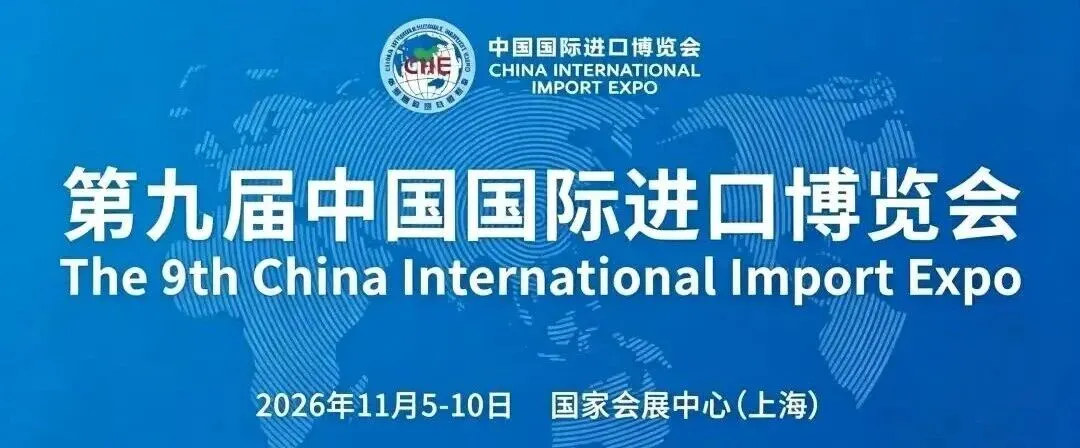
The ninth China International Import Expo (CIIE) will be held in Shanghai from November 5 to 10, with the Hongqiao International Economic Forum taking place concurrently. The event will draw participants from 162 countries, regions, and international organizations, as well as 4,142 overseas exhibitors. Its total exhibition area will exceed 440,000 square meters for the first time.
Source: International Services Shanghai
https://english.shanghai.gov.cn/en-CIIE2026Latest/20261016/a45e804b01474b3c83404aeff4f288e6.html
2.2026 Hongqiao HUB Conference to Open on November 6
[Keywords: Hongqiao HUB Conference]
The Sub-Forum on Building Hongqiao International Opening-Up Hub and the 2026 Hongqiao HUB Conference will be held at the National Exhibition and Convention Center (Shanghai) on November 6, 2026. Under the theme “A World-Class Hub for Opening-Up: Hongqiao as a Strategic Pivot for Businesses Going Global”, the conference will feature keynote speeches, major releases, themed speeches, and high-level dialogues. It will focus on the integrated upgrading of Hongqiao’s four major functions in transportation, exhibitions and conventions, business, and scientific and technological innovation, aiming to create a source of ideas on globalization for Chinese enterprises and a platform that empowers their overseas expansion.
Source: Shanghai Development and Reform
3.2026 World Laureates Forum Held in Shanghai
[Keywords: World Laureates Forum]

The 2026 World Laureates Forum was recently held in Shanghai. Themed “New Science Paradigm: Break Through for the Next Decade”, the forum comprised an opening ceremony and main forum, six parallel forums, four themed events, a closing ceremony, as well as related activities, science and technology visits, and other special events. Nearly 300 scientists and representatives of leading technology companies attended, including recipients of the Nobel Prize, Turing Award, Wolf Prize, and Fields Medal.
Source: International Services Shanghai
https://english.shanghai.gov.cn/en-Latest-WhatsNew/20261026/7db24c5b15734f99a99acba63f44d124.html
4.2026 Global Data Ecosystem Conference Held in Shanghai
[Keywords: Global Data Ecosystem Conference]

Recently, the 2026 Global Data Ecosystem Conference was held at the West Bund International Convention and Exhibition Center in Xuhui. Under the theme “Data Intelligence, Connecting the World”, the conference featured four sections covering conferences, commerce, exhibitions, and industry applications. It created an integrated platform for high-level dialogues, industry matchmaking, achievement showcases, and public experiences in the global data-factor sector, facilitating data-factor flows, international digital cooperation, and the practical application of innovative data and intelligent technologies.
Source: Shanghai Release
Competition Events
2026 China Squash Open to Kick Off on November 17
[Keywords: China Squash Open]

The 2026 China Squash Open will take place from November 17 to 22 at the Shanghai Xian Xia Tennis Center and the Shanghai Diamond Squash Center. As a Professional Squash Association (PSA) Squash Tour Gold-level event, the China Squash Open is currently the highest-level professional squash competition in Chinese mainland. A total of 48 professional players from 14 countries and regions have registered for the tournament.
Source: International Services Shanghai
https://english.shanghai.gov.cn/en-Latest-WhatsNew/20261027/549d2c7c6d1f4ef491d3790e14498f8c.html
Culture & Arts
1.Vienna State Opera to Begin Its First China Residency in 2028
[Keywords: Vienna State Opera]
The China Shanghai International Arts Festival Center and the Vienna State Opera recently signed a memorandum of cooperation, reaching an important consensus on the Opera’s residency in Shanghai during its visit to China in 2028. This will mark the Vienna State Opera’s return to China with a fully staged opera production after an absence of more than three decades. It will present a diverse series of performances and events over several consecutive days.
Source: China Shanghai International Arts Festival
2.Shanghai Museum Previews New Exhibition “Jewelry: The Body Transformed: Treasures from The Metropolitan Museum of Art”
[Keywords: Jewelry exhibition]

“Jewelry: The Body Transformed: Treasures from The Metropolitan Museum of Art” will be held in Special Exhibition Gallery 1 at Shanghai Museum East from November 18, 2026, to May 5, 2027. Jointly organized by Shanghai Museum and The Metropolitan Museum of Art, the exhibition will bring together 192 pieces or sets of art treasures from The Met’s collection, alongside more than 20 ancient Chinese jewelry artifacts selected from the Shanghai Museum collection, offering visitors a visual feast that blends Eastern and Western aesthetics.
Source: Shanghai Museum
3.“Art Ripples 2026” Kicks Off
[Keywords: Art Ripples]

“Art Ripples 2026” recently kicked off, featuring nearly 20 dynamic live performances and major productions. Highlights include Pareidolia, a wordless magical visual object theater production by Chile’s La Llave Maestra, and Extraordinary Voyage, an authentic German marionette show.
Source: Shanghai Jing’an